The rise of artificial intelligence is not on the horizon.
It’s already here. Read Harvard Business Review, Forbes, The Conversation app, or any news post. As Peter H. Diamandis writes in Metatrend #2: AI & Quantum (2024), the question isn’t whether AI will change the world- it’s how quickly, and how well prepared we are to adapt. I’m a fan of his books.
Since 1997, I’ve worked with leaders across several sectors using the Action Learning model– a proven framework that aligns real-world problem-solving with strategic learning. In that time, I’ve watched leaders panic or pivot in the face of digital disruptions. You have seen the panic in 2008. Today is the pivot.
The key difference? Those leaders who thrive don’t wait for government programs or corporate re-skilling. They invest in mastering three core skills that shape their adaptability, agency, and long-term success. That’s why I earned my PhD in business psychology in my 50s… Here are some highlights. You can master these skills.
The Three Essential Skills in an AI World
In a recent Moonshots podcast conversation between Peter Diamandis and Tony Robbins, they outlined three core competencies to help leaders remain relevant:
Pattern Recognition, Pattern Utilization, and Pattern Creation.
These three skills are not new to those of us who practice Action Learning. In fact, they are embedded into the very DNA of our model.
Let’s break them down and show how they’re alive in the executive leaders I’ve coached for three decades. YOU can apply these three skills immediately.
1. Pattern Recognition: Learning from Data
Tony Robbins describes Pattern Recognition as the ability to look at history, human behavior, and technology trends and say, “I’ve seen this before.” The result is less fear.
In Action Learning, we often begin with what Revans called “programmed knowledge” and “questioning insight…” the act of recognizing patterns in current systems, processes, and outcomes. I teach leaders to ask questions like:
“Where else have you seen this behavior?”
“What patterns are repeating here?”
“What’s being ignored?”
“What numbers and words can we us to describe this behavior?”
For example: In a healthcare company facing massive turnover, our Action Learning team mapped resignation data and recognized patterns of burnout following project cycles. By naming the pattern, the client was no longer surprised by attrition. They recognized seasonality and then began to prevent it.
2. Pattern Utilization: Acting on What You See
Recognition is only useful if it leads to effective action. As Tony Robbins notes, civilization began when we learned to use the pattern of seasons—planting in spring, harvesting in fall. The leap from fear to control came through utilization. Today is the season of springtime.
In Action Learning, we emphasize “taking action and reflecting on the results.” A team that sees a pattern of client dissatisfaction, for example, must test new workflows, measure response times, before they can adapt. Tools like surveys, interviews, observations, 360 assessments are helpful.
For example: One healthcare client noticed repeated delays in patient discharges every Friday. Instead of managing around the bottleneck, they used Action Learning to test discharge protocol changes. They used cross functional teams, called Action Learning Sets, to explore solutions. They saw a 17% improvement in weekend flow within 60 days. And yes, automation helped immensely.
3. Pattern Creation: Designing What Comes Next
This is where great leaders shine. This is where YOU can shine.
Diamandis calls it the highest skill: creating new patterns. Not just responding to the world but reshaping it. He founded Singularity University, the XPrize’s, and the Open EXO community to embrace converging technologies. In Action Learning, we guide teams to generate new frameworks, policies, and cultural norms based on data and learning.
This level is visionary. It’s where leaders become creators. Practical creators of one solution after another.
For example:In a regional asphalt company, an Action Learning team created a new RACI-based scheduling protocol that reduced field crew conflicts by 42%. That new pattern, tested and refined by a newly promoted operations manager, became company policy within one quarter.
The BIG Identity Shift: From Manager to Creator
This AI revolution is not just about skills. It’s about identity.
The Action Learning model pushes leaders to shift from “problem manager” to “solution creator.” That’s the identity shift Robbins, Diamandis, Revans and I are describing. We say, “Stop managing problems. Start creating solutions.”
FACT 1: You won’t be replaced by AI. FACT 2: You’ll be replaced by someone who uses AI more creatively than you do… unless you become that person first.
If you’re interested in diving deeper into the frameworks behind this post:
Diamandis, Peter H. (2024). Metatrend #2: AI & Quantum.
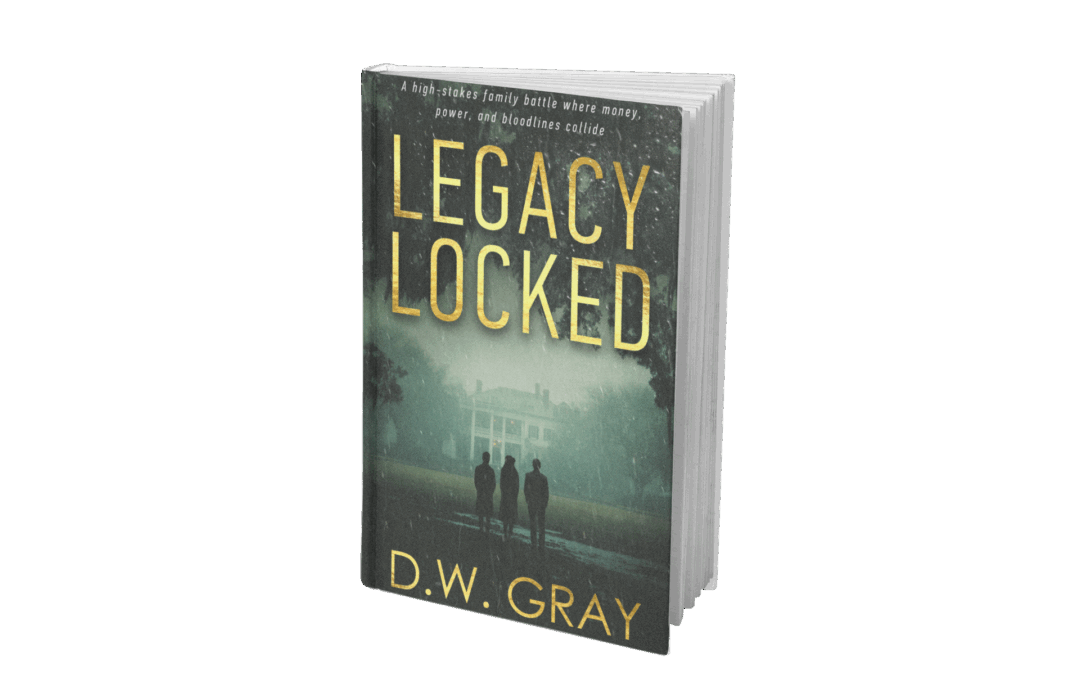
Will, Harper, and Nora Lee Dawson are heirs to a vast Southern empire. But when their father dies without a will and their calculating mother disappears, the family’s motto becomes a curse. Do they “Protect our assets? Trust nobody?”
Threats include legal ambiguity, AI manipulation, cyber predators, bizarre beneficiaries, and new advisors with contradictory expertise. To unlock – and protect- their family legacy, the siblings must develop new powers that their parents never taught them: Hope. Agency. Resilience. Optimism.
They have to do what they’ve never done before— trust each other.
FREE access is at https://action-learning.com/product/legacy-locked-book/. Use the coupon code crubne3q
Legacy Locked is more than a novel.
It’s a journey into the forces that shape what we inherit… and what we hide.
Gift #2: Download Legacy Locked book now. While it’s still free. FREE access is at https://action-learning.com/product/legacy-locked-book/. Use the coupon code crubne3q
Because the only thing scarier than a locked legacy… is never knowing what was inside.
Artificial intelligence dominates headlines with promises of revolutionary change, so it’s easy to feel overwhelmed by the noise. But beneath the hype and buzzwords lies tremendous value that can be applied immediately—particularly for family business leaders, Next Gens and smaller organizations.
Cutting Through the AI Noise
There’s a lot of “hoo-ha” around artificial intelligence today. Open any business publication—Harvard Business Review, McKinsey reports, VentureBeat, or Forbes—and you’ll find endless articles about AI’s utility, examples, and trends. Terms like “predictive analytics” get tossed around without clear definitions. Can we truly predict the next word in a sentence or the next market opportunity? There are tools like Lex Machina and Bloomberg Law that can forecast divorce or succession risk. But should they do so? The ethical clarity isn’t always there.
What we call “artificial human intelligence” are essentially algorithms—compilations designed to anticipate the next word. You’ve experienced this already: when you type “How do I…” into a Google browser, it fills in the likely next words, based on your search history. This predictive capability has evolved from simple sentence search completion to sophisticated tools like Microsoft’s Copilot that can generate content, edit documents, and create personalized interactions. AI learns from itself, which is why the default browser for Google has recently been replaced by Gemini.
The Rise of Customized AI
One of the most powerful developments is the ability to create customized AI systems. I’ve built what some call a “closed chat GPT”—an AI trained on my books, dissertation, research papers, blog posts, and website content. I call it “Gray Matters” and share it with my clients. When asked, “How would Doug respond to this situation?” it provides evidence-based answers drawn from that data set. Crucially, you can configure these closed systems to maintain confidentiality, which prevents your data from being shared with large language models.
Small business leaders can leverage this same technology. If you need to maintain client confidentiality for legal reasons but want to provide unique value to those clients, a closed AI system offers a perfect solution. This fact explains why there are so many chatbots on company websites—they’re cost-efficient and can provide consistent service 24/7. Do you need to invest in Schwab or Fidelity or Vanguard? Then you need to interact with bots before humans.
Digital Trust and Consumer Adaptation
Remember when Amazon first introduced Prime? Many doubted that package would succeed. Now one-click purchasing and “people like you bought” suggestions have become standard AI tools. These weren’t implemented randomly—they were based on extensive data analysis showing that buyers of one product were likely to purchase related items.
This example reflects a broader trend: we have developed increased digital trust in AI tools. Think about how you interact with Siri or Alexa—as if there’s another person in the room. These AI assistants weren’t part of our lives a decade ago, yet now they’ve become integral to our daily routines. Our expectations around AI are also shifting—we expect it to be personalized, always available, and worthy of our digital trust.
Accelerating Leadership Development
For the past year, I’ve focused on how AI can accelerate leadership development. The implications are profound for any individual or team committed to professional development. We can now provide 24/7 utility to confidential resources and interactive learning opportunities using AI avatars based on customized role-plays and scenarios.
Imagine clicking on ChatGPT repeatedly to gain insight into difficult topics: How do I deal with anxiety? How do I sleep better? How do I have a difficult conversation with a family member who’s resistant to dialogue? Now, these are skills that can be developed through deliberate practice.
Years ago, when I asked Google, “Can you be my executive coach?” it said “Not at this time.” Today, any AI platform—whether it’s ChatGPT, Claude, Grok, Poe, or another—will happily take on that role.
Our Hybrid Coaching Solution
AI can re-design executive coaching, leadership consulting, and transform your career. Imagine using hybrid coaching that combines AI practice with human expertise. Let me give you some examples.
A client named George wanted to develop better communication skills but didn’t want to ask his manager for help. Using our AI platform, George practiced difficult conversations repeatedly in a confidential environment. Then, when we meet for our 1:1 executive coaching session, George can share his screen and show me his AI interactions. I can provide feedback not just on the content of his responses but on his approach to learning.
This hybrid model works across professions. Imagine you’re a lawyer with clients who need to discuss succession planning, or a family wealth advisor helping clients prepare for difficult conversations with the next generation. These discussions require skills that many people haven’t developed. Behavioral feedback can provide better analysis and coaching suggestions than humans. When we practice new skills with AI, my clients can find the right words and approaches before having those crucial real-world conversations.
B2C and B2B Applications
I’ve developed two models for implementing hybrid consulting:
B2C (Business to Consumer): Individuals can access a platform to practice scenarios like dealing with anxiety, burnout, difficult family members, or deeper questions about purpose and faith. For about $100 monthly ($1,200 annually), users get unlimited access to AI-assisted practice scenarios. That investment often delivers more lasting value than a couple of traditional coaching sessions at the same investment level. See www.JITCoach.com or ask for a demo.
B2B (Business to Business): Teams and organizations can implement AI-assisted consulting to accelerate skill development. The data is compelling—sales teams using these approaches have shown a 24% increase in sales performance and 97% improvements in training retention. Compared to traditional online training programs that often show minimal results, this AI-assisted consulting represents a breakthrough. See www.Action-Learning.com or ask for a demo.
The Bottom Line
Artificial intelligence has been evolving since 1995. Now we have reached a point where it’s more consumer-friendly and accessible than ever. Just as you talk to Siri or use ChatGPT, you can now use AI-assisted consulting tools to accelerate your skill development, improve communication, and achieve outcomes faster, more effectively, and more affordably.
We will interact with AI-driven cars and live in an AI-enhanced world. Why wouldn’t we apply these same technologies to leadership development and executive coaching?
Want to learn more about implementing AI in your leadership development? Contact Doug at doug@action-learning.com or visit action-learning.com to schedule a demo.
Yes, the pyramids and Great Wall are significant structures.
However, if I were to list the greatest wonders of the world, Tribalism would be #1. Think about it.
You and I do whatever we can to protect our loved ones. Their safety is critical. We may mortgage the house to protect our children who require healthcare. Our social groups reinforce whatever world views we think are accurate. Algorithms are as ancient as the walls in Jerusalem that separated tribesmen. Why assume that tribalism is always a bad thing?
Tribalism describes the social fabric in every community. In every corner of the world. We have dress codes that reinforce local norms. We have countless languages, and jargon, to reinforce who is in the group. And we have endless examples of battles for property and social honor. Those tribal histories create identity and protect shared values.
My family roots include a Scottish clan that brutally fought for marginal farmland and sheep. My wife’s roots include a different Scottish clan that brutally fought against my antecedents. And today we embrace our shared Scottish roots. When I travel abroad and hear someone with an American accent I’m immediately drawn to them. Tribalism at work. We quickly identify those who “in group” and those who are “out group.”
Psychologists (like me) know that those judgements occur in a millisecond. Thankfully! They enabled my antecedents to survive. And they enable you and I to quickly discern threats from allies.
Tribalism in extended families permits all of us to protect and distribute assets (That’s the second wonder of the world, on my list of two wonders. For a different post). We save money and property so that we can distribute it to our loved ones.
When families protect assets, they can compound over time. The Vanderbilt assets were dissolved within one generation amid squalor. The Rockefeller assets are wisely distributed to this day because the family and their advisors subscribe to a shared belief: wealth requires responsible stewardship and service to others.
All philanthropy is the result of tribalism at work. Look around your city. Look at the names on the buildings such as that museum, university, church, synagogue, stadium…. Look at the beautiful shared spaces like parks, libraries, with anonymous donors who want to support their legacy.
Recently I video-recorded some comments about tribalism and compounding assets with a Family Office client. They serve 80 wealthy families with complex needs. At root, most of them share the same values of integrity, asset preservation, legacy leadership, stewardship, philanthropy.
We don’t talk about family business succession because we don’t understand wealthy people. All family enterprises are built on tribalism.
Fears prevent us from understanding the greatest wealth transfer in human history, which is quietly successful, and happening today.
I wonder what would happen if we discussed the power of tribalism and compounding assets more openly? I can think of 4-5 people I’d like to learn from. How about you?
You know the myth: Business succession is difficult and full of conflicts.
The myth is that outrageous Hollywood movies like Succession, The Godfather, Dallas or Dynasty are the norm. The myth is that tax advisors are never able to minimize taxation, that estate attorneys are well intentioned but haphazard, that more wealth leads to more conflict.
The fact is that most wealth transitions occur quietly when there is shared understanding of decision making. That’s called governance.
Good governance is the reality for ALL of my clients- or they wouldn’t hire me.
Good governance can be taught and developed.
Let’s start with two definitions. Then I’ll share 4 steps that really work.
There are two types of conflict: Interpersonal conflict is usually bad, and Task conflict is usually good.
Interpersonal conflict is based on emotions and should be managed carefully, even if you dislike that cousin who just said something outrageous. But how do we self-manage? We are emotional animals driven by fears. Threats are everywhere. !Right?! Behavioral psychology research confirms that we think faster or slower depending on the stimulus and the situation. When I’m inclined to speak impulsively, I often massage the back of my head. Why? Because I want to slow down, think, and respond with care. We can all practice self-management. The oldest part of our brain is in the back of our skull. The prefrontal cortex, our executive center, is in the front of our brains. So, on good days, we practice self-managing to avoid interpersonal conflicts. (Or not…)
Task conflict is based on different understandings of information or roles. When one cousin wants to invest in a new digital marketing program, and another cousin wants to invest in a new building, they will have task conflict. Task conflict is usually good because it may lead to innovations. I define innovation as “new ideas applied.” One reason for agendas and information packets before board meetings or family meetings, is to share information so that the participants can make smarter, more informed decisions. There can still be emotional moments- full of drama- but the focus of the meeting is on decision-making to address the task conflicts.
One reason for a facilitator with expertise in behavioral psychology (like me) is to minimize the interpersonal conflict and maximize the task conflicts.
As a species we all want to create order out of chaos. That’s why we construct processes, and (occasionally) organize our closets. That’s why we ask experts for advice. When we require a healthcare assessment we expect nurses to collect data, so that physicians using AI can diagnose and treat our evolving needs. Right? When we require a transfer of assets we expect attorneys and wealth advisors to assess needs in a deep discovery process, then recommend next steps. Right?
I organize teams of advisors to serve families because I know what works. Holistic advising is here to stay. And my clients deserve a team of experts. They also deserve a cleanly defined process. Something useful.
Here are the 4 steps in my Family Capital Discovery Process (based on my research and decades of consulting). Think of these as 4 phases in any engagement together. Notice the verbs in bold font. Perhaps you can adopt these?
a. Assess the current and future Family Enterprise ecosystem. I call these states the Now and the Next. Each ecosystem has unique history, values, legacy, stages, visions, and risks. A Family Business may generate assets, like a golden egg or a core business. And there may be multiple businesses over time, called a Family Enterprise. Think of Cargill or Walmart. Or think of the nearby franchise owner or car dealership in your city. Perhaps you know that over 60% of our GDP and job growth is driven by Family-Owned Businesses. How do you assess those unique strengths and weaknesses? Lately I’ve been using AI tools to accelerate that assessment process.
b. Develop a Family Manifesto that describes the Family Purpose and reasons for working with multiple advisors. Most families have a verbal understanding of what the founder, Elder or owners want. When that verbal understanding is written and shared, teams can evolve. For example, in a recent series of meetings, I conducted interviews with the Elders, took detailed notes, and shared their asset map with the Next Gens. They had never seen one list of their capital and financial assets- and there were plenty of rumors! Finally, they were able to draft a manifesto that accelerated succession planning. After decades of avoidance and mystery, they were finally able to make crucial investment decisions. Four branches – over 50 people- were relieved. When verbal or unstated assumptions become written and shared, family businesses can evolve. That’s called organizational maturity. And that process is not too difficult. Perhaps you know a family that can benefit from a Family Manifesto? Perhaps you can accelerate that process?
c. Define the four Family Focus Pillars. These are 4 critical questions used by families with over $50M in investable assets, who may have a Family Office to organize their legacy. (With credit to my friend Peter Vogel and his team at IMD). My experience is that these 4 questions can be useful for any family, with any amount of wealth. Perhaps you can answer them this weekend when you sit down for your next family dinner. Who we are? What do we own? How do we function? What is our impact on society and the environments and legacy? Yes, I’ve had these discussions with our nuclear family. Yes, you can do so also!
d. Organize more effective work guidelines with a team of advisors. We all need a little structure at times. We can’t play football without yard lines and goal posts. We can’t have a swim meet without lanes and a timing system. I recommend the least amount of structure in the moment. Families need to evolve. The reason I wrote the Success Playbook for Next Gen Family Business Leaders (2024) is because clients asked me to do so. It’s a playbook of books, structures, and great resources. Perhaps you know someone who needs a little structure or a loving nudge?
Bottom line: Now you know what works. Please share this post with those who would appreciate knowing what works.
One fact is that succession usually happens quietly, without conflicts.
Another fact is that good governance can be taught and developed.
Another fact is that we can each minimize interpersonal conflicts and maximize task conflicts.
Recently I read Wealth 3.0. and the authors state that interdisciplinary knowledge is one of the key predictors of success for consultants. I agree.
After a recent client engagement, my colleague said, “I never would have asked about the topics you brought up– increasing 1:1 time with each child, and family meetings to discuss charitable giving. How did you become so damned smart about so many different topics?”
I stuttered and paused with embarrassment.
I do read daily, and study new topics on YouTube, I listen carefully to what people say, and I watch what they do. But those are skills.
The deeper questions are “How did I develop my interdisciplinary knowledge?” and “How can I encourage others to do the same?”
Here are some loosely chronological stories about how I developed interdisciplinary knowledge. Perhaps they will trigger similar stories for you. I encourage you to consider HOW you develop interdisciplinary knowledge.
As a child I was expected to research answers from the set of books on the shelf, called Encyclopedia Brittanica. Long before wikipedia and digital tools, that was the preferred way to answer questions or settle disputes. My siblings were often more correct than me! We all learned to seek answers.
Multiple Elders challenged me to think for myself. The Boy Scout volunteers used merit badge content to reinforce new skills, and values like honesty and loyalty. Faculty members, who worked with my father, spent holidays with us and quizzed me on any topic- the power of compounding assets at TIAA-CREF, or the wisdom of building a private campground as a long term investment. I learned that adults may share their wisdom, and I may not agree with them.
That saying, “Never let schooling get in the way of a good education” is attributed to Mark Twain. It could have been a family motto above our doorframe. We were expected to attend schools.
At a large public high school in Clifton Park, NY, I was expected to take honors and New York State regents classes. I elected to take AP Psychology and Sociology classes. And as a senior I left school at 1:00 each day to work at a nearby food warehouse to save money for college. I didn’t have a car, so my mother drove me there and back for a year. From her I learned to work hard and save my earnings. From those workers I learned that education could create opportunities.
When I enrolled at Hamilton College, in Clinton, NY, I learned that it was one of the Top 10 Preppiest Colleges in the country. In my ignorance, I created a survey for all the incoming freshmen and stuck it in their mailboxes to ask “how well prepared are you?” and “where did you attend high school?” I learned that a 40% response rate was strong, and that there was no significant difference between self-confidence and high school preparation.
The class size at Hamilton was about 10 students. We were expected to ask questions and respectfully challenge one another. In one mid-January class, 5 of us sat in the professor’s office while he smoked his pipe and we discussed the explosive power of humanism in the Middle Ages. When a different professor shared that she studied with the author of one of our books, I learned that authors are accessible. And that they often disagree! Academics of any age can and should challenge one another. Later I learned that there was no mandatory course of study at Hamilton. Students there are expected to be interdisciplinary.
After two years there, amid a family relocation and financial stress, I went to the University of Minnesota in Minneapolis. Some of my class sizes were now hundreds of students! I learned that any undergraduate could substitute graduate level courses, so that’s what I did. My classmates were expert administrators or teachers. They all had strong opinions. I recall doing a project on creativity with a student who was also a professional videographer. Somehow we gained access and conducted interviews inside the public schools. Interdisciplinary skills were tolerated for entrepreneurial students.
My next few years were spent in applied leadership sessions, as an instructor in wilderness Outward Bound courses, backpacking expeditions in Wyoming and Montana, canoeing in Minnesota, trekking in England… Those seasons were great opportunities to observe how people experience stress, resilience, endurance, conflict. Then I spent years teaching English at four independent day and boarding schools. One prevailing lesson is that financial wealth does not protect people from stress or challenges.
My next formal schooling lessons were at Dartmouth College, in a program called the Master of Arts in Liberal Studies. We could study anything! So I explored the influence of landscape art in New Hampshire, educational pedagogy, feminism, equality, and social psychology. My thesis was a longitudinal study on Adolescent Risk Taking Behavior, because I wondered what led some people to embrace risks, and others to avoid risks. Perhaps I’m still collecting data on that topic!
My last example of formal schooling is called a terminal degree for good reason. After years of managing executive coaches, leading a nonprofit, and some time working in colleges, I knew I wanted to focus on applied psychology. And I needed to continue generating revenue through my consulting! The Chicago School of Professional Psychology was a good fit for online content, with two onsite events to validate our identity and assess our knowledge. I loved the structure of weekly reading, writing, commenting. In the three decades since I had studied psychology, there was a sea change in research away from what is wrong with people (anxiety, depression, violence) and toward what enables people to flourish (meaning, engagement, relationships, achievements). My dissertation focused on Positive Psychology Coaching protocols that accelerate leader development. Yes, I’m still collecting data on that topic too!
That’s my listed attempt to answer the first question: “How did I develop my interdisciplinary knowledge?” In short, by observing and reinforcing the strengths of others.
The second question was “How can I encourage others to do the same?”
I think each of us can say and do a better job of practicing interdisciplinary knowledge.
I encourage you to make your list of influences- formal schooling or informal lessons.
I encourage you to share that list with your loved ones. They need to know what you think and value.
I encourage you to share some of your examples in the comments below. Action leads to learning.
I suspect that when we are vulnerable about our interdisciplinary knowledge, then we are better practitioners.
What do you think?
This can become a discussion if you share any thoughts or comments below.

Recent Comments