Leaders practice leadership, just as physicians practice medicine. Here are some details.
Health Care Consulting and Leadership Coaching
We understand the challenges that executive leaders and physicians face. We are experts in individual and organizational behavioral change. Since 1997, we have consulted with hundreds of leaders using the 3A process of (1) assessment, (2) constructive actions, (3) accountability. Our purpose is to help leaders flourish as they achieve business outcomes.
Theoretical models
1. Positive psychology (PP) can be defined as the science and practice of well-being or flourishing. Prior to 1998, over 70% of psychological research focused on mental illness. Since 1998, a better balance has resulted from new scientific studies in mental health.
2. Psychological capital (PsyCap) is a developmental state comprised of hope, efficacy, resilience and optimism. Our research confirms that PsyCap can be developed, and explains up to 71% of engagement scores and 65% of job satisfaction scores.
Value to you • Modeling evidence-based practices in behavior change • providing a confidential assessment of individuals and teams • adding a third party, objective, supportive perspective to your leadership team • increasing accountability of each leader’s personal and professional goals • improving specific skills related to each leader’s role, such as supervisory or managerial skills, interpersonal communication, executive presence, conflict resolution, productivity • sharing world-class techniques from superb organizations that have done similar work • reviewing strategic business decisions related to operations, customer service, marketing, management or financials • being a sounding board for communication issues • preventing problems, thereby avoiding more expensive, time consuming or embarrassing actions • supporting each leader’s growth past any limiting beliefs
Our scope of services Individual executive leadership coaching typically requires at least 6 months of engagement for over 40 hours. All coaching service levels include an intake session, individual quantitative and qualitative assessments, 360 interviews, written behavioral action plans, milestone meetings with stakeholders, constructive actions, and accountability. We have a network of executive coaches throughout the U.S. All consulting and coaching services are guaranteed.
Your expected outcomes Develop leadership capacity in areas that are key to each leader’s success
Drive organizational performance through tactical execution, deliberate practice of desired behaviors, and focused strategic thinking
Leverage each leader’s strengths and mitigate risks, so that each leader can increase the probability of achieving key organizational outcomes
Increase retention of desired leaders
Our clients have experienced up to 1,200% return on investment, up to 60% increase in productivity, and up to 300% revenue growth. There are 100+ client testimonials at www.action-learning.com and on social media. Your outcomes need to be defined.
Your next steps For products and services visit us a twww.action-learning.com/action-leadership-store/ or here
To schedule a meeting or conversation contact: Doug Gray, PCC here or call 615.905.1892
The bottom line Action leads to learning. All leaders require executive coaching at times. Your most critical investment is to retain your desired employees.
What are you waiting for?
Download this list of services and investment levels now:
Every U.S. citizen has a vested interest and an opinion about the quality and effectiveness of healthcare delivery, a $3.8 trillion industry with rapidly escalating costs.
The fastest-growing industry in healthcare is telemedicine, which is now used in over 50% of the hospitals in the U.S. to promote remote access to healthcare. Examples range from tele-surgery to tele-emergency care to tele-psychiatry. The reasons for telemedicine abound. It allows specialized care to be distributed from a central hub to a rural location or an underserved population, efficiently and at lower costs. For instance, in 2012, the Veterans Administration (VA) documented over 1.5 million telehealth sessions, for over 35% of veterans.
Problem statement and opportunity
The primary problem with telemedicine is low user adoption rates because many people resist organizational change. The result is massive waste that can be reduced. Telemedicine technology and processes exist. However, organizational readiness for telemedicine results from two variables: 1) ability to change, and 2) motivation to change. The innovation diffusion curve (see Figure 1) demonstrates an immediate opportunity for telemedicine initiatives to move from the early adopter phase to the majorities.
Organizational readiness for telemedicine can be measured. The key variables for organizational readiness include 1) executive sponsors who champion the ability and need to change, 2) buying agents convinced by case studies or ROI data of the economic value for the change, and 3) consumers driven by a compelling need for effective, inexpensive health care outcomes. The need for organizational leadership innovations in telemedicine programs is immediate.
Figure 1: The innovation diffusion curve (in Rogers (2003) Diffusions of Innovation)
Unique opportunity: Tennessee
Although resistance to telemedicine is a global problem, we have a unique opportunity to provide a solution from Tennessee. Described as the “Global Center of Healthcare,” Nashville, TN has over 400 healthcare companies, spawned from Healthcare Corporation of America (HCA). On January 1, 2015, Tennessee became the 21st state to enact “telemedicine parity” legislation requiring that insurers reimburse licensed health care providers for services delivered remotely just as they would for in-person visits. On February 15, 2015 Tennessee added law stating that telehealth providers will be held to the same level of care as direct care providers (SB 1223). That law “opened the door” for telemedicine services to be delivered remotely, at lower cost, to rural minorities in Tennessee. We are in the right time at the right place to lead innovation in telemedicine.
Sadly, there is resistance to telemedicine from consumers and administrators who do not trust the government, or the technology, or the financial benefits. A telemedicine visit may cost $50 and take 10 minutes (e.g. MD Live, Teladoc); an ER visit may cost $150 and take 3 hours; a hospital visit may cost $15,000 and take 3 days. Telemedicine has demonstrated a 10X cost savings. Unless, of course, there is organizational resistance to change, in which case telemedicine is a waste of time and resources.
One administrator said, “We have 3 telemedicine kiosks sitting in a storage room, hidden by sheets. The vendor who provided them no longer exists. The technology may be extraordinary, but I cannot get my physicians and nurses to use it.” His experience represents hundreds of wasteful healthcare initiatives.
What can you do to increase adoption of telemedicine?
Skills that may be modeled and directly transferable to patients (e.g., CBT)
Thankfully, resilience can be taught and developed.
Resiliency can be defined as “the capacity to adapt successfully in the presence of risk and adversity.”
Take this quick self diagnosis for burnout and resiliency:
Take a moment to write down where you think you are on a scale of 1 (low) to 10 (high) on these two measures. Note that burnout and resiliency are directly related and inversely related. Like any coin with two sides…
A self-diagnostic question is “How do you know if you are avoiding burnout behaviors?”
An organizational-diagnostic question is to ask your team if they have noticed you being less compassionate, hopeful and caring lately?
Or if you are daring, ask your team if they have noticed you being more abrupt, judgmental, or impatient lately?
(We are often hired to assess the degree of burnout or resiliency in a practice group.)
My experience is that these bullets are 5 reasons for you to do some work. “Physician heal thyself” is axiomatic. As a species, we need to make more anabolic choices than catabolic choices.
CBT is cognitive behavioral therapy, a psychological process that recognizes choice, personal strengths, and includes reqular behavioral feedback.
I hire a dentist when I need dental work; why wouldn’t you hire a psychologist when you need to develop resilience for your self or your team?
Or to help any physician who may be struggling with burnout. Please forward this blog.
Download this link for the slide deck:
Physician_Burnout_061615
Thank you for taking a few minutes to learn about physician burnout, diagnosis, treatment and care.
We can help you. Our experience is that you are not alone.
For many generations a stigma existed stating that physicians who 1) endure medical school and residency, 2) can endure anything.
Some critics state that such a “social contract” no longer exists in healthcare.
In confidence, physicians often state, “I am not a super hero. Although my family and patients tug at me as if I have some supernatural power. It is exhausting trying to keep up with the demands of insurers and employers.”
Amid our current culture of healthcare reform and continued changes in care, all physicians are forced to adapt. The highest rate of burnout, over 50%, is for mid-career physicians, 11-20 years after residency.
Who is taking care of the physicians?
Like the photo in the opening slide, physicians often state that they wish for a helping hand “On their shoulder.”
All physicians need a helping hand
A coaching question for you is “What do you need?”
A diagnois? A treatment plan? A care program? Something else? We can help you.
The core of physician-patient relationships is trust.
But what do you know about your physician’s values regarding end of life decisions, or women’s reproductive choice? What do you know about the treatment and care suggested by your physician, who may be eligible for a $5,000 referral fee or $2,500 volume price incentive?
Leana Wen, MD, is a Rhodes Scholar and author of “When Doctors Don’t Listen.” Her TED talk, called “What your doctor won’t disclose,” has been viewed by over 1.3 million people.
Her story includes role models from her childhood in China, to a campaign called “Who’s my doctor?” designed to encourage doctors to share their values and be more transparent with their patients.
She states, “we need to change the paradigm of medicine from sickness and fear to openness and healing.“
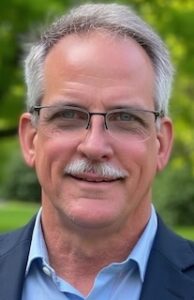
Doug Gray, PhD PCC, is an expert Family Wealth Advisor, leadership consultant, champion for Next Gen leaders, and teacher.
Yes, this headshot was AI-generated because his family said he needed to show his grey hair…
Consulting Experience
Doug helps business leaders accelerate their succession planning and legacy goals, with less conflict or confusion.
He says, “We are all concerned about our wealth. We are all in transition. We all struggle with decision making. We all seek advice.”
Doug focuses on the “People Side” of family wealth because his clients deserve both the art of expertise and the science of data. He typically collaborates with multidisciplinary teams of advisors who add financial, legal, and insurance expertise.
In 2024 he developed an AI-assisted performance feedback communication coaching solution at www.JITCoach.com that enables leaders to practice communication skills and reduce conflict or anxiety.
What about you and your loved ones? What do you need next?
Doug knows that leaders need to practice leadership, just as physicians practice medicine and attorneys practice law. Leaders need artful consulting. We need to Practice Leadership. So, where do you start?
He and his teams have a track record of 100% client satisfaction and guaranteed results since 1997 with thousands of clients in multiple business sectors (e.g., manufacturing, finance, retail, technology, pharmaceuticals, healthcare, insurance, investments).
Many are family-owned business leaders, owners and managers.
Doug provides expertise to business leaders during their transitions. Specifically, he assesses individual and team strengths and gaps and recommend behaviors that enable leaders to avoid pain, and to flourish. See his 360 assessment at www.AssessNextGen.com
Why focus on family wealth advising? Doug says, “My parents and family have been critical to all of my success, and to my nuclear family, and families are the lifeblood of positive social change. In every corner of the world. And in every business sector. What could be a more critical focus?”
His recent leadership consulting work has led to: 1) the 360-assessment consulting process described at www.AssessNextGen.com for license and leaders, 2) the customized content and digital solutions described at Family-Wealth-Network.com, 3) his recent books “Legacy Locked” (2025) and “The Success Playbook for Next Gen Family Business Leaders” (2024) (see the list below), and 4) a hybrid coaching solution at www.JITCoach.com that uses both customized AI and expert performance coaches to help leaders develop essential communication skills.
Doug would love the opportunity to learn more about you, your family, your business, your vision, and your challenges. Please schedule a mutually convenient time using this link: https://calendly.com/doug-gray/intro-call
He would say, “Here’s to you, At Your Best.” I help business leaders accelerate their succession planning and legacy goals, with less conflict or confusion. We are all concerned about our wealth. We are all in transition. We all struggle with decision making. We all seek advice. I focus on the “People Side” of family wealth because my clients deserve both the art of expertise and the science of data. I typically collaborate with multidisciplinary teams of advisors who add financial, legal, and insurance expertise. Recently, we have developed an AI-assisted performance feedback communication coaching solution at JITCoach.com that enables leaders to practice communication skills and reduce conflict or anxiety. What about you and your loved ones? What do you need next? We know that leaders need to practice leadership, just as physicians practice medicine and attorneys practice law. Leaders need artful consulting. So, where do you start? We have a track record of 100% client satisfaction and guaranteed results since 1997 with thousands of clients in multiple business sectors (e.g., manufacturing, finance, retail, technology, pharmaceuticals, healthcare, insurance, investments). Many are family-owned business leaders, owners and managers. We provide expertise to business leaders during their transitions. Specifically, we assess individual and team strengths and gaps and recommend behaviors that enable leaders to avoid pain, and to flourish. Why? My parents and family have been critical to all of my success, and to my nuclear family, and families are the lifeblood of positive social change. In every corner of the world. And in every business sector. My recent leadership consulting work has led to: 1) the 360-assessment consulting process described at AssessNextGen.com, 2) the customized content and digital solutions described at Family-Wealth-Network.com, 3) my recent books “Legacy Locked” (2025) and “The Success Playbook for Next Gen Family Business Leaders” (2024), and 4) a hybrid coaching solution at JITCoach.com that uses both customized AI and expert performance coaches to help leaders develop essential communication skills. I would love the opportunity to learn more about you, your family, your business, your vision, and your challenges. Please schedule a mutually convenient time using this link: https://calendly.com/doug-gray/intro-call Here’s to you “At Your Best,” Doug Gray
Top skillsTop skills
360 Assessments • Strategic Consulting • Conflict Management • Family wealth • Leadership Development360 Assessments • Strategic Consulting • Conflict Managment • Family wealth • Leadership Development
Business Consulting • Management Consulting • Change Management • Executive Coaching • Leadership Development • Training • Team Building
A representative list of leadership coaching engagements include:
CFO and 20 leaders in finance and accounting, Fortune 500 energy construction company, who needed to embrace a redesign without losing productivity
team of EVPs tasked with redesigning the IT needs of their F100 healthcare company
MD struggling with burnout who needed confidential consulting (e.g. anonymity from his employer and insurer)
CEO in a technology company recently promoted to replace the founder
President and 18 members of executive leadership team, Fortune 500 energy construction company, who needed to demonstrate alignment within 6 months
SVP and site managers at a nuclear power construction site who needed to increase alignment with business partners and avoid negative media
SVP in functional but de-centralized group who needed to assimilate 20 leaders, using action learning methodology in direct meetings, coaching, and SharePoint to drive accountability
Small business owner of a franchise who needed to fire an employee after 11 years of good service
SVP, global bank, who needed to reorganize a division
VP, global bank, seeking career opportunities
newly hired VP who needed to develop radical transformation of a functional group that required external coaching and team building leadership training using a customized app
Newly promoted director who lacked interpersonal skills to manage 33 people
Founder of an IT company who was not able to develop new business
Business/Organizational Leadership Experience
Doug has been a successful business owner since 1997; he knows the challenges and “what works.” He co-developed the Leadership Development Institute at the University of Maryland, College Park and taught there for 7 years, and he is a former adjunct faculty member at several colleges including NC State University. He directed a non-profit agency in Washington, D.C. for 9 years and grew it 900% while managing 120 people. As a former world-class athlete, Doug knows that the rigor of change requires regular support from experienced consultants, plus a dash of humor.
Education and Training
Doug’s graduate research at Dartmouth College included development of an assessment to determine risk tolerance and risk aversion. That theme of mitigating risk in business and leadership has prevailed in his continued learning from clients and colleagues in the safety, consulting, executive assessment, and leadership development industries. He is certified in the Hogan suite, DISC, Positive Psychology, several 360’s, several EI assessments, and 5 coaching certification programs. Since 2000, Doug has been a Professional Certified Coach (PCC) with the International Coaching Federation.
A perpetual learner, in his 50’s he earned a PhD in Organizational Leadership from the Chicago School of Professional Psychology. His research interests include the effect of positive psychology on business leaders, managers, and executive coaches. His dissertation title is “Positive Psychology Coaching Protocols: Creating Competitive Advantage for Leader Development (2018).
Publications and Appearances
Doug loves to share his expertise as a speaker, facilitator and a writer. As a keynote speaker, he has addressed annual meetings, executive retreats, and nonprofit leaders. As a facilitator, he has partnered with clients to design experientially memorable leadership training solutions that range from boot camps to strategic off-sites to contests using customized mobile apps. As an author, he has frequently been published in journals ranging from Family Firm Institutes’ Practitioner, Family Business.org, to the American Society of Safety Engineer’s Professional Safety to Financial Advisor to dozens of webinars and hundreds of guest blogs. There are 200+ videos of his content on YouTube at https://www.youtube.com/@NextGenerationLeaders
He is a published author of articles on leadership development, AI, family business leadership, succession planning, physician burnout, healthcare, analytics, safety and productivity. Doug has published multiple books:
Legacy Locked (2025). See www.Legacy-Locked.com
The Success Playbook for Next Gen Family Business Leaders (2024)
Objectives and Key Results (OKR) Leadership; How to Apply Silicon Valley’s Secret Sauce to your Career, Team or Organization (2019). See www.OKRLeadership.com
Passionate Action; 5 Steps to Creating Extraordinary Success in Life and Work (2007)
Adventure Coaching; A Guidebook for Action-Based Success in Life and Work (2006)
Doug will not waste any of your time or resources. He expects you to achieve great results. And he always guarantees exceptional value.
Call him now at 704.995.6647 or contact us here or at https://calendly.com/doug-gray/intro-call
For biographies on other Action Learning Associates, Inc leadership consultants and executive coaches, contact us here or review the list of our partners here. We also provide scaled solutions for any-sized organization, anywhere in the world.


Recent Comments