The rise of artificial intelligence is not on the horizon.
It’s already here. Read Harvard Business Review, Forbes, The Conversation app, or any news post. As Peter H. Diamandis writes in Metatrend #2: AI & Quantum (2024), the question isn’t whether AI will change the world- it’s how quickly, and how well prepared we are to adapt. I’m a fan of his books.
Since 1997, I’ve worked with leaders across several sectors using the Action Learning model– a proven framework that aligns real-world problem-solving with strategic learning. In that time, I’ve watched leaders panic or pivot in the face of digital disruptions. You have seen the panic in 2008. Today is the pivot.
The key difference? Those leaders who thrive don’t wait for government programs or corporate re-skilling. They invest in mastering three core skills that shape their adaptability, agency, and long-term success. That’s why I earned my PhD in business psychology in my 50s… Here are some highlights. You can master these skills.
The Three Essential Skills in an AI World
In a recent Moonshots podcast conversation between Peter Diamandis and Tony Robbins, they outlined three core competencies to help leaders remain relevant:
Pattern Recognition, Pattern Utilization, and Pattern Creation.
These three skills are not new to those of us who practice Action Learning. In fact, they are embedded into the very DNA of our model.
Let’s break them down and show how they’re alive in the executive leaders I’ve coached for three decades. YOU can apply these three skills immediately.
1. Pattern Recognition: Learning from Data
Tony Robbins describes Pattern Recognition as the ability to look at history, human behavior, and technology trends and say, “I’ve seen this before.” The result is less fear.
In Action Learning, we often begin with what Revans called “programmed knowledge” and “questioning insight…” the act of recognizing patterns in current systems, processes, and outcomes. I teach leaders to ask questions like:
“Where else have you seen this behavior?”
“What patterns are repeating here?”
“What’s being ignored?”
“What numbers and words can we us to describe this behavior?”
For example: In a healthcare company facing massive turnover, our Action Learning team mapped resignation data and recognized patterns of burnout following project cycles. By naming the pattern, the client was no longer surprised by attrition. They recognized seasonality and then began to prevent it.
2. Pattern Utilization: Acting on What You See
Recognition is only useful if it leads to effective action. As Tony Robbins notes, civilization began when we learned to use the pattern of seasons—planting in spring, harvesting in fall. The leap from fear to control came through utilization. Today is the season of springtime.
In Action Learning, we emphasize “taking action and reflecting on the results.” A team that sees a pattern of client dissatisfaction, for example, must test new workflows, measure response times, before they can adapt. Tools like surveys, interviews, observations, 360 assessments are helpful.
For example: One healthcare client noticed repeated delays in patient discharges every Friday. Instead of managing around the bottleneck, they used Action Learning to test discharge protocol changes. They used cross functional teams, called Action Learning Sets, to explore solutions. They saw a 17% improvement in weekend flow within 60 days. And yes, automation helped immensely.
3. Pattern Creation: Designing What Comes Next
This is where great leaders shine. This is where YOU can shine.
Diamandis calls it the highest skill: creating new patterns. Not just responding to the world but reshaping it. He founded Singularity University, the XPrize’s, and the Open EXO community to embrace converging technologies. In Action Learning, we guide teams to generate new frameworks, policies, and cultural norms based on data and learning.
This level is visionary. It’s where leaders become creators. Practical creators of one solution after another.
For example:In a regional asphalt company, an Action Learning team created a new RACI-based scheduling protocol that reduced field crew conflicts by 42%. That new pattern, tested and refined by a newly promoted operations manager, became company policy within one quarter.
The BIG Identity Shift: From Manager to Creator
This AI revolution is not just about skills. It’s about identity.
The Action Learning model pushes leaders to shift from “problem manager” to “solution creator.” That’s the identity shift Robbins, Diamandis, Revans and I are describing. We say, “Stop managing problems. Start creating solutions.”
FACT 1: You won’t be replaced by AI. FACT 2: You’ll be replaced by someone who uses AI more creatively than you do… unless you become that person first.
If you’re interested in diving deeper into the frameworks behind this post:
Diamandis, Peter H. (2024). Metatrend #2: AI & Quantum.
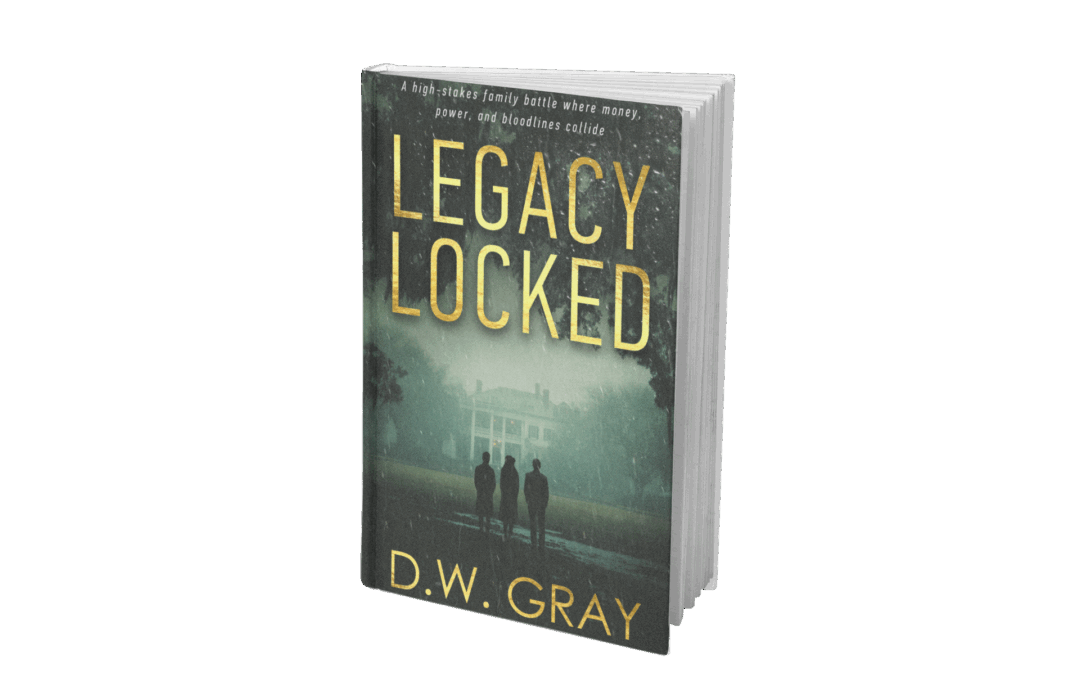
Will, Harper, and Nora Lee Dawson are heirs to a vast Southern empire. But when their father dies without a will and their calculating mother disappears, the family’s motto becomes a curse. Do they “Protect our assets? Trust nobody?”
Threats include legal ambiguity, AI manipulation, cyber predators, bizarre beneficiaries, and new advisors with contradictory expertise. To unlock – and protect- their family legacy, the siblings must develop new powers that their parents never taught them: Hope. Agency. Resilience. Optimism.
They have to do what they’ve never done before— trust each other.
FREE access is at https://action-learning.com/product/legacy-locked-book/. Use the coupon code crubne3q
Legacy Locked is more than a novel.
It’s a journey into the forces that shape what we inherit… and what we hide.
Gift #2: Download Legacy Locked book now. While it’s still free. FREE access is at https://action-learning.com/product/legacy-locked-book/. Use the coupon code crubne3q
Because the only thing scarier than a locked legacy… is never knowing what was inside.
Artificial intelligence dominates headlines with promises of revolutionary change, so it’s easy to feel overwhelmed by the noise. But beneath the hype and buzzwords lies tremendous value that can be applied immediately—particularly for family business leaders, Next Gens and smaller organizations.
Cutting Through the AI Noise
There’s a lot of “hoo-ha” around artificial intelligence today. Open any business publication—Harvard Business Review, McKinsey reports, VentureBeat, or Forbes—and you’ll find endless articles about AI’s utility, examples, and trends. Terms like “predictive analytics” get tossed around without clear definitions. Can we truly predict the next word in a sentence or the next market opportunity? There are tools like Lex Machina and Bloomberg Law that can forecast divorce or succession risk. But should they do so? The ethical clarity isn’t always there.
What we call “artificial human intelligence” are essentially algorithms—compilations designed to anticipate the next word. You’ve experienced this already: when you type “How do I…” into a Google browser, it fills in the likely next words, based on your search history. This predictive capability has evolved from simple sentence search completion to sophisticated tools like Microsoft’s Copilot that can generate content, edit documents, and create personalized interactions. AI learns from itself, which is why the default browser for Google has recently been replaced by Gemini.
The Rise of Customized AI
One of the most powerful developments is the ability to create customized AI systems. I’ve built what some call a “closed chat GPT”—an AI trained on my books, dissertation, research papers, blog posts, and website content. I call it “Gray Matters” and share it with my clients. When asked, “How would Doug respond to this situation?” it provides evidence-based answers drawn from that data set. Crucially, you can configure these closed systems to maintain confidentiality, which prevents your data from being shared with large language models.
Small business leaders can leverage this same technology. If you need to maintain client confidentiality for legal reasons but want to provide unique value to those clients, a closed AI system offers a perfect solution. This fact explains why there are so many chatbots on company websites—they’re cost-efficient and can provide consistent service 24/7. Do you need to invest in Schwab or Fidelity or Vanguard? Then you need to interact with bots before humans.
Digital Trust and Consumer Adaptation
Remember when Amazon first introduced Prime? Many doubted that package would succeed. Now one-click purchasing and “people like you bought” suggestions have become standard AI tools. These weren’t implemented randomly—they were based on extensive data analysis showing that buyers of one product were likely to purchase related items.
This example reflects a broader trend: we have developed increased digital trust in AI tools. Think about how you interact with Siri or Alexa—as if there’s another person in the room. These AI assistants weren’t part of our lives a decade ago, yet now they’ve become integral to our daily routines. Our expectations around AI are also shifting—we expect it to be personalized, always available, and worthy of our digital trust.
Accelerating Leadership Development
For the past year, I’ve focused on how AI can accelerate leadership development. The implications are profound for any individual or team committed to professional development. We can now provide 24/7 utility to confidential resources and interactive learning opportunities using AI avatars based on customized role-plays and scenarios.
Imagine clicking on ChatGPT repeatedly to gain insight into difficult topics: How do I deal with anxiety? How do I sleep better? How do I have a difficult conversation with a family member who’s resistant to dialogue? Now, these are skills that can be developed through deliberate practice.
Years ago, when I asked Google, “Can you be my executive coach?” it said “Not at this time.” Today, any AI platform—whether it’s ChatGPT, Claude, Grok, Poe, or another—will happily take on that role.
Our Hybrid Coaching Solution
AI can re-design executive coaching, leadership consulting, and transform your career. Imagine using hybrid coaching that combines AI practice with human expertise. Let me give you some examples.
A client named George wanted to develop better communication skills but didn’t want to ask his manager for help. Using our AI platform, George practiced difficult conversations repeatedly in a confidential environment. Then, when we meet for our 1:1 executive coaching session, George can share his screen and show me his AI interactions. I can provide feedback not just on the content of his responses but on his approach to learning.
This hybrid model works across professions. Imagine you’re a lawyer with clients who need to discuss succession planning, or a family wealth advisor helping clients prepare for difficult conversations with the next generation. These discussions require skills that many people haven’t developed. Behavioral feedback can provide better analysis and coaching suggestions than humans. When we practice new skills with AI, my clients can find the right words and approaches before having those crucial real-world conversations.
B2C and B2B Applications
I’ve developed two models for implementing hybrid consulting:
B2C (Business to Consumer): Individuals can access a platform to practice scenarios like dealing with anxiety, burnout, difficult family members, or deeper questions about purpose and faith. For about $100 monthly ($1,200 annually), users get unlimited access to AI-assisted practice scenarios. That investment often delivers more lasting value than a couple of traditional coaching sessions at the same investment level. See www.JITCoach.com or ask for a demo.
B2B (Business to Business): Teams and organizations can implement AI-assisted consulting to accelerate skill development. The data is compelling—sales teams using these approaches have shown a 24% increase in sales performance and 97% improvements in training retention. Compared to traditional online training programs that often show minimal results, this AI-assisted consulting represents a breakthrough. See www.Action-Learning.com or ask for a demo.
The Bottom Line
Artificial intelligence has been evolving since 1995. Now we have reached a point where it’s more consumer-friendly and accessible than ever. Just as you talk to Siri or use ChatGPT, you can now use AI-assisted consulting tools to accelerate your skill development, improve communication, and achieve outcomes faster, more effectively, and more affordably.
We will interact with AI-driven cars and live in an AI-enhanced world. Why wouldn’t we apply these same technologies to leadership development and executive coaching?
Want to learn more about implementing AI in your leadership development? Contact Doug at doug@action-learning.com or visit action-learning.com to schedule a demo.
In this episode: Rod Zeeb & Doug Gray, Co-Founder of Assess Next Gen and a Consultant with The Family Business Consulting Group, discuss trends in both qualitative and quantitative assessments that are available, information for access to the assessments, and collaborators to help you if you need it.
Here are 7 examples of new affiliations and movement in the last 13 months:
The Brentwood, TN Rotary Club (a long time Paul Harris fellow) committed to “service above self.”
Member of the Williamson, Inc Chamber of Commerce, in Franklin, TN
The Association of Talent Development (ATD) board member in professional development (2015-15) and membership (2015-16); created a Special Interest Group (SIG) for Consultants and hosted monthly meetings on countless topics since January, 2015
Member of the National Federation of Independent Business (NFIB)
Member of the Nashville Technology Center (NTC); accepted by Launch TN grant funding program to apply for federal grant to the NIH or USDA, using consultants Mark and Catherine Henry, with mentoring from Jim Stefansic PhD, to assess the impact of telemedicine programs in rural disparities
Promoted the TN-HIMSS conference in October, 2015 for healthcare leaders, Chief Technology Officers, Chief Information Officers
Created and hosted monthly meetings on “Talent Analytic Trends” at local businesses, including Rustici Software, the “best technology company in Nashville” and a global leader in SCORM and Watershed, their Learning Record System; those meetings featured leaders and new technologies that are redesigning how we measure talent, careers, and human achievement.
Quite a list for 13 months in a new town.
Back to that coaching question: How are you moving?
Call any time to discuss what is next for you, your leaders, or your business.

Recent Comments