Lately I’ve been studying the design of psychological thrillers to determine what I like and don’t like. And what I might adopt or discard in my writing.
After identifying best sellers with over 5 million copies sold, from contemporary male authors, I settled on Alex Michaelides, who recently rocked the literary world with The Silent Patient and The Maidens.
Sadly, those titles were not in the local library, so I settled for The Fury. I’ve bought several other titles since reading this book.
If a thriller is designed to seduce us with suspense, misdirection, and character depth, then The Fury offers two out of three. Character depth is missing.
This isn’t a summertime beach read. It’s a constructed play. A stage set. And in many ways, I think that’s his point.
Narrative Design: When the Story Knows It’s a Story and thinks It’s Really Clever.
We’re introduced to an unreliable narrator who doesn’t just bend the truth, he crafts a performance. Like a playwright. Michaelides leans into the “meta” style: breaking the fourth wall, teasing what he’ll reveal later, and toying with our trust like an illusionist. It’s part Alfred Hitchcock, part Greek tragedy, part Netflix writer’s room. Totally unfamiliar to me… which made me feel ignorant at times.
For readers who enjoy that layered, self-referential tone, it may be a thrilling design. For those who want to read a clean narration, you may feel disappointed.
I suppose that all art deserves meta-new-radical styes… To test the norms. Call me ignorant.
Characters: Lots of Surface, Not Much Substance
Michaelides writes about beautiful, broken people in exotic places. The celebrity actress. Beloved by all. Then murdered. And this locked room setting- a private Greek island- creates an intense cinematic atmosphere. Surrounded by the endless winds, like the ancient Greek Furies, who reflect their fears and tensions. The characters? They’re glamorous, enigmatic, and often underwritten. Archetypes more than complex characters with emotional depth. As if they are wearing those large masks from Greek tragedies.
The central narrator offers clever insights, but rarely emotional vulnerability. And that’s the gap. We’re watching from the VIP balcony in the Greek theater. Outdoors. But never allowed backstage or inside their hearts.
Style: Controlled, like a noisy wind whipping around an ancient Greek column.
The Fury moves slowly, like a carefully blocked play. That pacing is deliberate. The reveals are timed. Slowly. The tension is intellectual more than visceral. Some of the twists work, others feel dropped in as if from a screenwriting workshop. Maybe that’s part of the meta-design.
It’s an emotionally distant style. Perhaps reflecting the celebrity movie star who is admired more than deeply loved.
What Works for me:
Narrative voice that dares me/ you to keep up with clever reversals
Elegant structure with Acts that create a theatrical sensibility
Strong control over tone and pacing and setting
Evokes the classic designs from Agatha Christie or Alfred Hitchcock
What Doesn’t work for me:
Emotional detachment from the central players
Plot twists that feel too engineered, or too late (Maybe I’m getting too critical in my old age)
Meta narration design led to frustrations and made me set the book aside (Probably because I don’t understand the fourth wall direct appeals to readers.)
Character development that rarely gets beneath the masks worn on the island
Some Final Thoughts
I closed The Fury feeling impressed but not moved. I wanted to be greatly moved. Perhaps I should have read his other titles first…
The Fury is a clever novel about storytelling. But that cleverness left me wanting.
Read it if you want a stylish mental puzzle.
Have you read it? Did the narrator charm you or push you away?
Drop a comment- I’d love to know what you think of thrillers that know they’re thrillers.
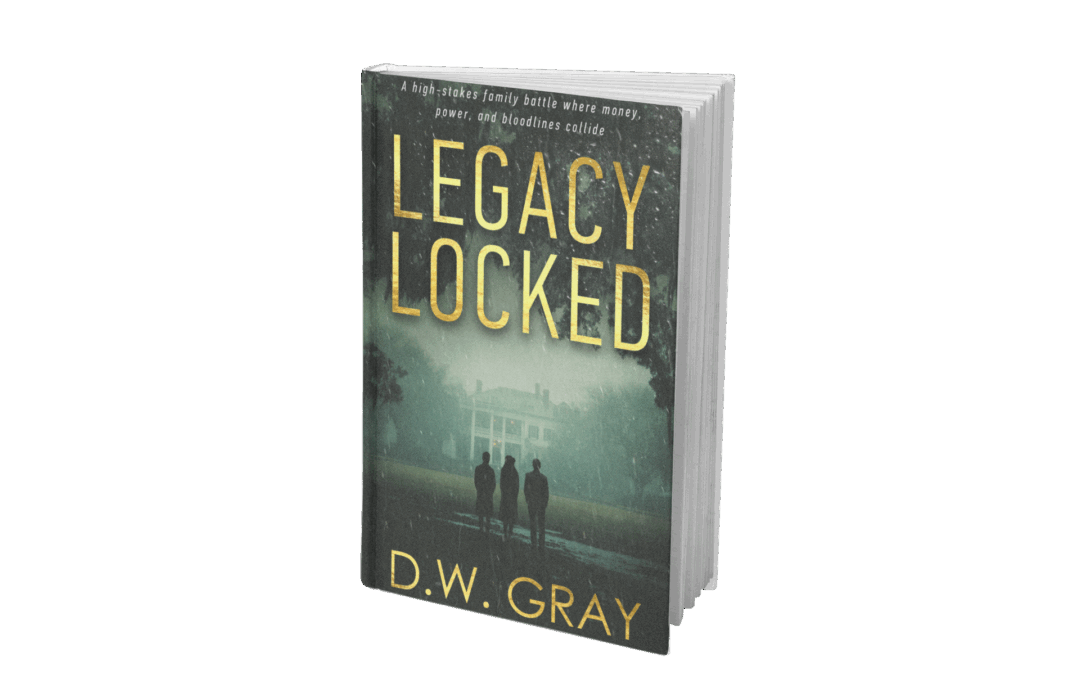
Will, Harper, and Nora Lee Dawson are heirs to a vast Southern empire. But when their father dies without a will and their calculating mother disappears, the family’s motto becomes a curse. Do they “Protect our assets? Trust nobody?”
Threats include legal ambiguity, AI manipulation, cyber predators, bizarre beneficiaries, and new advisors with contradictory expertise. To unlock – and protect- their family legacy, the siblings must develop new powers that their parents never taught them: Hope. Agency. Resilience. Optimism.
They have to do what they’ve never done before— trust each other.
FREE access is at https://action-learning.com/product/legacy-locked-book/. Use the coupon code crubne3q
Legacy Locked is more than a novel.
It’s a journey into the forces that shape what we inherit… and what we hide.
Gift #2: Download Legacy Locked book now. While it’s still free. FREE access is at https://action-learning.com/product/legacy-locked-book/. Use the coupon code crubne3q
Because the only thing scarier than a locked legacy… is never knowing what was inside.
Practice leadership. Just as attorneys practice law, leaders need to practice leadership. Great leaders influence others toward a better future. Leadership requires public optimism. Narcissism. Confidence. Practice, and more practice. Every day I identify the top 8-10 people I need to influence. They may be clients, colleagues, prospects, friends, loved ones. Then I write their names on my list and practice leadership. Some require a phone call, others need a direct meeting. All on my daily target list need to know that they are important to me and my business. When I practice leadership daily, then I stay focused on my objective of being a leading provider of outcome-based leadership development solutions. You can practice leadership daily.
Doug Gray, PhD, author of Objectives and Key Results (OKR) Leadership, CEO of Action Learning Associates, has worked with over 10,000 leaders in multiple sectors since 1997.
For a print or digital copy of Objectives + Key Results (OKR) Leadership; How to Apply Silicon Valley’s Secret Sauce to Your Career, Team or Organization, click here. This book is a great read during the holidays, as you prepare for a New Year, a New You or New Decade in 2020.
Then write a review in your favorite social media platform. Mention my title: Objectives + Key Results (OKR) Leadership; How to apply Silicon Valley’s secret sauce to your career, team or organization.
Please share these testimonials with your team or organization:
“Doug Gray makes the complex understandable. More important, he makes it doable.”
Craig E. Aronoff, Ph.D., author, Chairman and co-founder, The Family Business Consulting Group, Inc.
“Doug builds on the OKR approach with practical and valuable guidance for individuals, teams and organizations. If you plan on implementing OKRs for your organization, you need this book.”
John Mattox, PhD, author, Head of Talent Research, Metrics that Matter, Explorance
“Introducing the OKR framework has not only allowed us to align our company goals throughout the organization, but it has also provided an easy mechanism to give visibility into how we drive operational accountability.”
Justin Jude, Acting President, LKQ Corp, North America
“Finally, a much needed leadership focus on the importance of clear objectives and specific, measurable results. This book will be useful not just for the present but throughout a practitioner’s career.“
Dave Vance, PhD, author, Executive Director, Center for Talent Reporting
My new Objectives and Key Results (OKR) Leadership book (2019)
Please help me promote my new leadership book! The editing is nearly completed… Yeah!
Title: Objectives + Key Results (OKR) Leadership; How to apply Silicon Valley’s secret sauce to your career, team or organization.
1. The e-book digital release is available now. Pre-order here.
2. The paper and audible book releases will be available after 11.14.19. Please forward this page to your friends and colleagues today.
3. Share these testimonials:
“Doug’s leadership training of the OKR process has been received positively by my sales team due to the coaching being simple, engaging and very effective.” Terry Fortner, VP Sales and Marketing, North America LKQ Corporation.
“Doug Gray makes the complex understandable. More important, he makes it doable.” Craig E. Aronoff, Ph.D., author, Chairman and co-founder, The Family Business Consulting Group, Inc.
“John Doerr’s book “Measure What Matters” describes how OKRs (Objectives and Key Results) transformed Silicon Valley. With this new book, Doug builds on the OKR approach with practical and valuable guidance for individuals, teams and organizations. If you plan on implementing OKRs for your organization, you need this book.” John Mattox, PhD, author, Head of Talent Research, Metrics that Matter, Explorance
“The top five companies in Silicon Valley have an economic value as great as the United Kingdom. They must know something. Doug has uncovered their secrets in his OKR Leadership approach.” Jac Fitzenz, PhD, author, Founder Saratoga Institute and Human Capital Source
“Doug Gray provides readers with a ‘moment of truth’ concerning how we can transform lofty objectives into down-to-earth results.” James Dillon, co-Founder, Emerging Step
“Introducing the OKR framework has not only allowed us to align our company goals throughout the organization, but it has also provided an easy mechanism to give visibility into how we drive operational accountability. That visibility now exists for both our employees and supervisors. OKR Leadership has encouraged broader and more in-depth conversations about the right key results to drive individual or team objectives.” Justin Jude, Acting President, LKQ Corp, North America
“Doug’s new book challenges me to be a leader and to practice leadership. This book provides a practical framework that will make you a more successful leader.“ David Cardwell, SVP, IT Operations, F100 company
“Finally, a much needed leadership focus on the importance of clear objectives and specific, measurable results. This book will be useful not just for the present but throughout a practitioner’s career.“ Dave Vance, PhD, author, Executive Director, Center for Talent Reporting
“In his new and exciting book, OKR Leadership, Doug Gray shares how his proven techniques can help you move the needle to achieve the business outcomes you’ve been striving for. If you’re ready for a transformation, then OKR Leadership is a must read!” Sheri Bankston, VP, Alliance Safety Council
“History is littered with the graves of organizations who had the right strategy but were unable to execute. Lack of execution is a very real threat to every organization’s survival. This is a very practical look at the OKR system to accomplishing results. Written incredibly clearly, Doug Gray has brought OKR Leadership to life in a way that would benefit any organization.” Brian Underhill, Ph.D., author, Founder and CEO, CoachSource
4. Share this back cover:
Leaders practice leadership, just as physicians practice medicine and attorneys practice law. Objectives and Key Results (OKRs) are the secret sauce that drives the largest migration of financial assets and technological innovation ever recorded in human history to Silicon Valley, California, USA, since the 1970s. OKR Leadership — the process for managers and leaders to practice what matters – is the secret sauce that drives transformational leadership, employee engagement and the next generation of management consulting. Join the OKR Leadership movement. See details at www.Action-Learning.com or www.OKRLeadership.com. This practical and valuable book will help you practice OKR Leadership in your career, team or organization immediately.
7. Download Chapter 1 as my gift to you (below.) Then write a review in your favorite social media platform. Then forward this page to your friends and colleagues.
(Disclosure: I am a fan of Marshall Goldsmith because he is an enthusiastic role model for countless executive coaches. When I shook his hand at an event hosted by the Center for Creative Leadership, I told him so. And when I was given four copies of this book to distribute to our largest CoachSource clients, I told them something favorable. Marshall Goldsmith has celebratory cachet as a thinker and a champion.)
I wanted to love this book, but it fell short.
Triggers can be defined as “any stimulus that defines our behavior.” That broad definition enables Goldsmith to go beyond Skinnerian behaviorism, or beyond antecedent-behavior-consequence, or Duhigg’s cue-routine-reward model. The “Circle of Engagement” model includes five steps: trigger-impulse-awareness-choice-behavior. The primary focus of the book is to “help others achieve lasting positive change.”
Structures help us define individual behavioral change. Goldsmith defines three structures: the AIWATT question, the “Six Engaging Questions” and the “Wheel of Change.”
The AIWATT question can increase engagement. Ask yourself, “Am I willing, at this time, to make the investment required, to make a positive difference on this topic?” Am I willing at this time… is the short version.
The six “Engaging Questions” can be useful early in a coaching engagement, and when measuring behavioral trends. The questions are: 1. Did I do my best to set clear goals? 2. Did I do my best to make progress toward my goals? 3. Did I do my best to find meaning? 4. Did I do my best to build positive relationships? 6. Did I do my best to be fully engaged?
The Wheel of Change can be described using two axis or four spokes on a wheel. One axis is the Positive to Negative axis, which “tracks the elements that either help us or hold us back.” The second axis is the Change or Keep axis, which “tracks the elements that we determine to change or keep in the future.” This descriptive model encourages clients to explore what they may need to create, eliminate, accept or preserve in order to achieve their desired behavior change.
The remaining content includes anecdotes from Goldsmith’s broad client base. His charming, self-effacing style often made me smile. The inclusion of the Buddhist anecdote reminding us that anger is always directed at “an empty boat” is a perfect reminder to stay focused on our internal locus of control in the moment. The resounding feeling I had is that the book made me feel good, consider using some of these structures, and then wonder “Now what?”
There are no citations of published works in this book. However, an emerging body of academic research does exist. Positive psychology provides the theoretical construct that the profession of executive coaching sorely needs. There is abundant research in well-being. Seminal leaders include Richard Boyatzis’ Intentional Change Model and studies using neurobiology, Mihaly Csikszentmihalyi’s Flow and optimal experience research, and Martin Seligman’s work in PERMA (positive emotion, engagement, relationships, meaning and purpose, and accomplishment.) These are evidence-based thought leaders, with broad following, who are not referenced by Marshall Goldsmith. That fact makes me wonder, why not?
According to the International Coaching Federation, there are now some 50,000 professional coaches in a $7 billion industry with little consistency. (Disclosure: I have been certified at the ICF-PCC level since 2006.) The Conference Board 2014 survey, from 142 companies, defines external executive coaches compensation ranging from $600-200/ hour depending upon the size of the company, developmental needs of the leader, and seniority. The average investment for 6 months and 40-45 hours is $25,000. The 2014 ICF survey states that the average salary is $214/hour. The market realities and financial value of executive coaching are significant.
My experience of countless “coaches” is that the profession sorely needs a) a scientific evidence-based backbone and b) a theoretical backbone. Without such theory, science, and applications, the profession of executive coaching is at risk.
In hindsight, I realize that I wanted Marshall Goldsmith to provide some leadership or insight into these aspects of executive coaching. Marshall Goldsmith’s book Triggers does not address any of these academic, social and market realities. Hence it fell short of what I had expected. I can imagine him chuckling and retorting, “OK, so what are you going to do that would make you happier?”


Recent Comments