Recently I read Wealth 3.0. and the authors state that interdisciplinary knowledge is one of the key predictors of success for consultants. I agree.
After a recent client engagement, my colleague said, “I never would have asked about the topics you brought up- increasing 1:1 time with each child, and family meetings to discuss charitable giving. How did you become so damned smart about so many different topics?”
I stuttered and paused with embarrassment.
I do read daily, and study new topics on YouTube, I listen carefully to what people say, and I watch what they do. But those are skills.
The deeper questions are “How did I develop my interdisciplinary knowledge?” and “How can I encourage others to do the same?”
Here are some loosely chronological stories about how I developed interdisciplinary knowledge. Perhaps they will trigger similar stories for you.
I encourage you to consider HOW you develop interdisciplinary knowledge.
As a child I was expected to research answers from the set of books on the shelf, called Encyclopedia Brittanica. Long before wikipedia and digital tools, that was the preferred way to answer questions or settle disputes. My siblings were often more correct than me! We all learned to seek answers.
Multiple Elders challenged me to think for myself. The Boy Scout volunteers used merit badge content to reinforce new skills, and values like honesty and loyalty. Faculty members, who worked with my father, spent holidays with us and quizzed me on any topic- the power of compounding assets at TIAA-CREF, or the wisdom of building a private campground as a long term investment. I learned that adults may share their wisdom, and I may not agree with them.
That saying, “Never let schooling get in the way of a good education” is attributed to Mark Twain. It could have been a family motto above our doorframe. We were expected to attend schools.
At a large public high school in Clifton Park, NY, I was expected to take honors and New York State regents classes. I also elected to take AP Psychology and Sociology classes. And as a senior I left school at 1:00 each day to work at a nearby food warehouse to save money for college. I didn’t have a car, so my mother drove me there and back for a year. From her I learned to work hard and save my earnings. From those workers I learned that education could create opportunities.
When I enrolled at Hamilton College, in Clinton, NY, I learned that it was one of the Top 10 Preppiest Colleges in the country. In my ignorance, I created a survey for all the incoming freshmen and stuck it in their mailboxes to ask “How well prepared are you?” and “where did you attend high school?” I learned that a 40% response rate was strong, and that there was no significant difference between self-confidence and high school preparation.
The class size at Hamilton was about 10 students. We were expected to ask questions and respectfully challenge one another. In one mid-January class, 5 of us sat in the professor’s office while he smoked his pipe and we discussed the explosive power of humanism in the Middle Ages. When a different professor shared that she studied with the author of one of our books, I learned that authors are accessible. And that they often disagree! Academics of any age can and should challenge one another. Later I learned that there was no mandatory course of study at Hamilton. Students there are expected to be interdisciplinary.
After two years there, amid a family relocation and financial stress, I went to the University of Minnesota in Minneapolis. Some of my class sizes were now hundreds of students! I learned that any undergraduate could substitute graduate level courses, so that’s what I did. My classmates were expert administrators or teachers. They all had strong opinions. I recall doing a project on creativity with a student who was also a professional videographer. Somehow we gained access and conducted interviews inside the public schools. Interdisciplinary skills were tolerated for entrepreneurial students.
My next few years were spent in applied leadership sessions, as an instructor in wilderness Outward Bound courses, backpacking expeditions in Wyoming and Montana, canoeing in Minnesota, trekking in England… Those seasons were great opportunities to observe how people experience stress, resilience, endurance, conflict. Then I spent years teaching English at four independent day and boarding schools. One prevailing lesson is that financial wealth does not protect people from stress or challenges.
My next formal schooling lessons were at Dartmouth College, in a program called the Master of Arts in Liberal Studies. We could study anything! So I explored the influence of landscape art in New Hampshire, educational pedagogy, feminism, equality, and social psychology. My thesis was a longitudinal study on Adolescent Risk Taking Behavior, because I wondered what led some people to embrace risks, and others to avoid risks. Perhaps I’m still collecting data on that topic!
My last example of formal schooling is called a terminal degree for good reason. After years of managing executive coaches, leading a nonprofit, and some time working in colleges, I knew I wanted to focus on applied psychology. And I needed to continue generating revenue through my consulting! In my 50’s. The Chicago School of Professional Psychology was a good fit for online content, with two onsite events to validate our identity and assess our knowledge. I loved the structure of weekly reading, writing, commenting. In the three decades since I had studied psychology, there was a sea change in research away from what is wrong with people (anxiety, depression, violence) and toward what enables people to flourish (meaning, engagement, relationships, achievements). My dissertation focused on Positive Psychology Coaching protocols that accelerate leader development. Yes, I’m still collecting data on that topic too!
That’s my listed attempt to answer the first question: “How did I develop my interdisciplinary knowledge?” In short, my answer is, by observing and reinforcing the strengths of others.
The second question was “How can I encourage others to do the same?”
I think each of us can say and do a better job of practicing interdisciplinary knowledge.
I encourage you to make your list of influences- formal schooling or informal lessons.
I encourage you to share that list with your loved ones. They need to know what you think and value.
I encourage you to share some of your examples in the comments below. Action leads to learning.
I suspect that when we are vulnerable about our interdisciplinary knowledge, then we are better practitioners.
What do you think?
This can become a discussion if you share any thoughts or comments below.
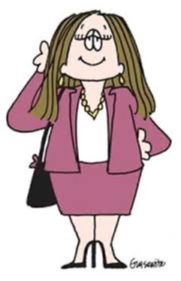
Imagine that you meet someone like Crazy Cathy. She may not look like this image…
IF you had to work with her, now imagine that you had a cheatsheet like the following one… for key behaviors, her preferred communication style, and what NOT to say to her.
Behavior
•Creativity, spontaneity, and unconventional thinking
• Individuality and freedom of expression
•Unpredictable behavior
•Impulsive decision
Preferred Communication Style from Others
•Open-minded, receptive to new ideas
•Willing to engage in brainstorming sessions or unconventional approaches
•Exploration and experimentation
What Not to Say or Do
•Rigid structures or limitations
•Dismissing her creativity
•Not being sensitive
In my consulting engagements, I never get a cheat sheet like the one above. Who does?
One of the reasons I developed these cheatsheet notes (with my friend Richa Singh) is because we were presenting a workshop called “Consulting With Next Gen Leaders” at the Purposeful Planning Institute in Denver, CO, on July 30, 2024.
Another reason for this post is because we developed 10 more avatars.
If you want to see the others, or use them to understand the emotional complexity in your family system, then contact me today.
I’m often surprised at what business psychologists know, that advisors could benefit from knowing and practicing… This content is #1 of 3 articles.
Title: The HERO Model: An approach for Navigating Organizational Changes in Family Enterprises
All leaders and advisors struggle with Organizational Change. How could our work be anything else? Family enterprises are infinitely complex. No one likes to be told to change. We all bring our biases and adopt heuristics to reduce that complexity. Attorneys say, “We mitigate risk.” Wealth advisors say, “We leverage capital assets.” Next Gens say, “We want to innovate.”
We all use heuristics (patterns for what works) to reinforce the structures that reflect our worldview for each family system. One common example is the multidisciplinary views of capital, that include financial, social, human, family, legacy, and intellectual views of capital. Those views of capital are resource-based, and the capital diminishes as we age. In my final years, for example, I will forget people and information, and my financial assets will be invested into healthcare… just like each of our clients.
What would happen if more practitioners adopted a more pervasive and universal view of capital?
Social psychologists (like me) know that Psychological Capital (PsyCap) is a dynamic, validated construct that can be used to describe our clients. PsyCap is defined as a construct based on 4 inter-related competencies: Hope, Efficacy, Resilience, and Optimism (see the APA link here, or read the book here).
As the primary author, Fred Luthans, recently stated to me, “PsyCap has and continues to take off across the world … I have over 166,000 citations of my research which has been awarded in the top 1% of all researchers in all fields in the world and ranks #1 in organizational behavior textbooks. In other words, I am very happy with how PsyCap research is going, especially in the global economy.” (direct communication 9.5.24).
The HERO model is more than a convenient acronym. The HERO-within model is a critical approach that practitioners can apply at multiple levels- individual, team/ family, and organizational/ societal.
I have applied the PsyCap model with countless clients for decades. You can also do so!
Practitioners, by definition, need to practice new behaviors and share them widely. My opinion is that practitioners have a fiduciary responsibility to practice both new ideas (innovation) and celebrate strengths (stability) every day.
The purpose of these 3 short articles is to introduce the HERO model, like a new vocabulary term, and examples that can be applied by advisors in any discipline. I invite you to assess how you can apply these practical examples with yourself, your loved ones, and with the clients you serve.
Imagine that you are building a house with a garden that you hope will support generations of loved ones. Hope is defined as “the will and the way” to build a better future (read the book here). Every founder believes “I can build this product or service.” Their hopes are often defined in founder’s history books or videos, vision statements, the stories told and re-told at gatherings. Efficacy is the capacity to build that new house, to get the job done. We all use blueprints such as values statements, family constitutions, charters, phased strategic plans for new projects. Resilience is our capacity to respond to adversity by returning to the same or a better level. Examples include our responses to global disease, market adversity, or loss of our loved ones. Optimism is our choice to believe in a positive outcome, such as well-being for our children and grandchildren. All four of these competencies can be measured, taught in under 90 minutes, and developed over time. The PsyCap impact is more significant when all four competencies are measured (a second-order effect) than when only one or three competencies are measured.
Here are examples for how we can accelerate PsyCap at three levels: Individual, Team/ Family and Organizational/ Societal.
Article #1 of 3: The HERO Model applied at the Individual level
We all need to look in the mirror at times. We all need to exhale. All good leadership development models start with self-awareness and lead to new actions, so it makes sense to start this list of activities with assessments, then several new behaviors that you can implement immediately.
A. Pre-Meeting or Annual Surveys. For years I’ve embedded these 4 questions into surveys so that I can provide a summary of PsyCap changes over time. Directions: On a scale of 1 (low) to 10 (high) how do you assess each of the following?
1. Hope. I have “the will and the way” to achieve my goals.
2. Efficacy. I feel confident that I know what I need to do to achieve my goals.
3. Resiliency. I can get through difficult times or challenges.
4. Optimism. I am optimistic about what will happen to me in the future.
When I share the data, I also encourage people to use these four vocabulary words regularly.
B. Self-Assessments. Individuals and teams can clarify values using free tools like https://www.viacharacter.org/ or https://www.lifevaluesinventory.org/
Personality and behavioral data including strengths and derailers can be assessed from https://www.hoganassessments.com/ or https://www.discprofile.com/
C. 360-Assessments. The most valid form of assessment is anonymously collected from others and focuses on the behaviors of family and non-family leaders. See my process at https://assessnextgen.com/
D. Reflected Best Self activity. When I ask 10-15 people to describe my strengths and weaknesses, those details can help me identify how I can be “At My Best.” Our colleagues and loved ones may never have been asked to provide feedback or advice. (See details at https://hbr.org/2005/01/how-to-play-to-your-strengths).
E. Three Good Things. The gold standard in social science, with over 100 years of research, occurs when a random sample population repeatedly has a significant result from an isolated behavior. Imagine that you practice this new behavior for a week. When going to bed, write down or state out loud Three Good Things that happened that day. Simple activity, right? If we measured your subjective well-being (happiness) daily, it would increase. Related prosocial measures, like gratitude and kindness, also increase. If you extend your Three Good Things activity into a journal for months and years, then you can ask your loved ones if they notice any results. (read the book here).
F. Adopt a metaphor, such as building a new house with a garden where your great grandchildren can flourish. When we “design a future self or future house” then we can adopt that metaphor and practice flourishing. Ask any founder. Or ask any parent. When we hold newborn children, we always whisper our best intentions and hopes. Why not do the same for yourself and your clients?
Time to pause… what do you think?
Article #2 in this series will focus on the team/ family level.
Article #3 in this series will focus on the organizational/ societal levels of organizational change.
Conclusion
Like every practitioner, I’m regularly reminded of how little I know. I ask for advice, and read, and on good days I listen well. Then I try something new. The PsyCap term may be new to some readers. However, the words “hope, efficacy, resilience and optimism” are ancient and familiar.
If we embrace the HERO model for our loved ones and our clients, then we are practicing ancient wisdom, in a new way. (See my riveting dissertation here).
My experience is that Psychological Capital describes family-centric values over a longer term than any other measure of capital.
Please add your thoughts if you share that bias or want to continue this conversation!
He stood there for so long that a gigantic security guard said, “You can’t just stand here.”
No response.
Then the guard said, ” If you don’t move along then I’ll have to fine you $100.”
Still no response.
Then the guard said, “What are you doing here? Where are you going?”
The positive psychologist smiled and said, “How about if I pay you the $100 and come back next week? I want you to ask me those two questions week after week.”
And so began the history of professional coaching…
Yes, you can define a meaningful outcome for yourself!
Based on my research, here are the top outcomes for business coaching. Pick one or two.
Top business coaching outcomes:
o Banking and financing
o Board of directors/advisors
o Branding
o Change management
o Communication skills
o Compensation and benefits
o Computer security
o Conflict resolution
o Customer service
o Ethics
o Insurance / risk management
o Leadership assessments
o Managing growth
o Managing others
o Marketing
o Net profit
o Operations
o Personal finances
o Personal health and well-being
o Presentation skills
o Safety/ workers compensation
o Sales
o Talent development
o Time/energy management
Now what?
Find someone who can ask you those two questions: “What are you doing here? Where are you going?”
The rise of artificial intelligence is not on the horizon.
It’s already here. Read Harvard Business Review, Forbes, The Conversation app, or any news post. As Peter H. Diamandis writes in Metatrend #2: AI & Quantum (2024), the question isn’t whether AI will change the world- it’s how quickly, and how well prepared we are to adapt. I’m a fan of his books.
Since 1997, I’ve worked with leaders across several sectors using the Action Learning model– a proven framework that aligns real-world problem-solving with strategic learning. In that time, I’ve watched leaders panic or pivot in the face of digital disruptions. You have seen the panic in 2008. Today is the pivot.
The key difference? Those leaders who thrive don’t wait for government programs or corporate re-skilling. They invest in mastering three core skills that shape their adaptability, agency, and long-term success. That’s why I earned my PhD in business psychology in my 50s… Here are some highlights. You can master these skills.
The Three Essential Skills in an AI World
In a recent Moonshots podcast conversation between Peter Diamandis and Tony Robbins, they outlined three core competencies to help leaders remain relevant:
Pattern Recognition, Pattern Utilization, and Pattern Creation.
These three skills are not new to those of us who practice Action Learning. In fact, they are embedded into the very DNA of our model.
Let’s break them down and show how they’re alive in the executive leaders I’ve coached for three decades. YOU can apply these three skills immediately.
1. Pattern Recognition: Learning from Data
Tony Robbins describes Pattern Recognition as the ability to look at history, human behavior, and technology trends and say, “I’ve seen this before.” The result is less fear.
In Action Learning, we often begin with what Revans called “programmed knowledge” and “questioning insight…” the act of recognizing patterns in current systems, processes, and outcomes. I teach leaders to ask questions like:
“Where else have you seen this behavior?”
“What patterns are repeating here?”
“What’s being ignored?”
“What numbers and words can we us to describe this behavior?”
For example: In a healthcare company facing massive turnover, our Action Learning team mapped resignation data and recognized patterns of burnout following project cycles. By naming the pattern, the client was no longer surprised by attrition. They recognized seasonality and then began to prevent it.
2. Pattern Utilization: Acting on What You See
Recognition is only useful if it leads to effective action. As Tony Robbins notes, civilization began when we learned to use the pattern of seasons—planting in spring, harvesting in fall. The leap from fear to control came through utilization. Today is the season of springtime.
In Action Learning, we emphasize “taking action and reflecting on the results.” A team that sees a pattern of client dissatisfaction, for example, must test new workflows, measure response times, before they can adapt. Tools like surveys, interviews, observations, 360 assessments are helpful.
For example: One healthcare client noticed repeated delays in patient discharges every Friday. Instead of managing around the bottleneck, they used Action Learning to test discharge protocol changes. They used cross functional teams, called Action Learning Sets, to explore solutions. They saw a 17% improvement in weekend flow within 60 days. And yes, automation helped immensely.
3. Pattern Creation: Designing What Comes Next
This is where great leaders shine. This is where YOU can shine.
Diamandis calls it the highest skill: creating new patterns. Not just responding to the world but reshaping it. He founded Singularity University, the XPrize’s, and the Open EXO community to embrace converging technologies. In Action Learning, we guide teams to generate new frameworks, policies, and cultural norms based on data and learning.
This level is visionary. It’s where leaders become creators. Practical creators of one solution after another.
For example:In a regional asphalt company, an Action Learning team created a new RACI-based scheduling protocol that reduced field crew conflicts by 42%. That new pattern, tested and refined by a newly promoted operations manager, became company policy within one quarter.
The BIG Identity Shift: From Manager to Creator
This AI revolution is not just about skills. It’s about identity.
The Action Learning model pushes leaders to shift from “problem manager” to “solution creator.” That’s the identity shift Robbins, Diamandis, Revans and I are describing. We say, “Stop managing problems. Start creating solutions.”
FACT 1: You won’t be replaced by AI. FACT 2: You’ll be replaced by someone who uses AI more creatively than you do… unless you become that person first.
If you’re interested in diving deeper into the frameworks behind this post:
Diamandis, Peter H. (2024). Metatrend #2: AI & Quantum.
The Future of Family Offices: Why Multidisciplinary Teams Are Essential
The goal of every family office is the same- to serve the financial and capital needs of current and future generations. However, the process is changing.
We will always require attorneys and wealth advisors to “stay in their swim lanes” and practice compliance. That will never change. Those silos are necessary, but NOT sufficient. Today, cross functional teams of interdisciplinary advisors are collaborating and providing external expertise.
Recently I was asked to create video recordings for a multi-family office (MFO) with over $1B in assets under management. They wanted me to share succession planning advice with their 80+ clients. Last week I talked with my new friend, Charmaine Tang, CEO of Orca Americas, about the need for people and technology to model innovation for family offices. Also last week I invited Brannon Fisher, a MFO partner, to share advice with our Next Gen Peer Group leaders when we met in Denver. Minutes ago I spoke with Bradley Franc, CEO of Succession Strategies, who said, “We don’t do what you do. We should partner.”
Notice the pattern?
We all have such meetings, because we all serve the current and future needs of our clients.
I can only imagine that such collaboration will accelerate. There is a growing trend toward building multidisciplinary teams within large family offices. Those internal teams may include specialists from various fields together to collaborate and provide comprehensive advice. Naturally, each advisor brings unique legal, financial, or relational expertise. Every smaller Family Office needs to do the same. They need to develop external teams of expert advisors. The power of multidisciplinary collaboration lies in our ability to address the full complexity of family dynamics and wealth management.
Wealth advisors, thankfully, are focused on maximizing assets for long-term gain. Attorneys and insurance advisors focus on protecting assets and minimizing risk, thankfully! Both roles are critical and are NOT sufficient for Next Gen leaders who expect more transparency, digital access, and opportunities to learn.
Family Offices, like any social organization, need to evolve. Every aspect of the family’s wealth or legacy deserves expert advice.
Navigating Intergenerational Conversations
Consider a typical family office meeting: the Elder Generation is planning for retirement and succession, while the Next Generation is learning about investments and long-term financial planning. In the middle, a team of advisors—legal, economic, and often behavioral psychologists (like me) —helps facilitate the conversation.
These discussions may be delicate. The Elder Generation needs to learn to bite their tongues. They need to encourage the Next Generation to ask questions about access to funds, investment strategies, and their personal goals.
For younger family members, these meetings present an opportunity to learn about critical topics like compounding interest, wealth distribution, and long-term planning. I’ve been facilitating a series of family meetings with three Elders, five Next Gens, and three wealth advisors from Northern Trust. By the end of the last session, the Elders were beaming with satisfaction. A multidisciplinary team ensures that these meetings are not just about financial details but about fostering open, constructive dialogue across generations. Advisors from different fields can help ensure that the right questions are being asked and that all voices are heard.
The Expanding Role of the Family Office
Family offices have historically focused on wealth management—handling investment portfolios, estate planning, and tax strategies. But the role of the family office is evolving faster than ever. Many family offices are expanding toward a more comprehensive model that addresses both financial and Family Capital.
The Family Capital Model includes five key areas:
Health and well-being
Family governance and decision-making
Succession planning and education for the next generation
Family dynamics and interpersonal relationships
Risk management, both financial and relational
This expansion reflects a broader understanding that to preserve a family’s legacy, the focus must be on the whole family, not just its financial assets. How do Family Office leaders support that broad need? With timing and expertise.
The Importance of Multidisciplinary Collaboration
Timing matters. Bringing in the right expertise at the right time is critical for any family office. A well-rounded team of advisors can ensure that a family’s needs—whether related to wealth, legal matters, or family dynamics—are met efficiently and effectively. When a Family Office relies solely on financial experts, it risks overlooking other vital family legacy elements. A multidisciplinary team mitigates this risk by ensuring that all aspects of the family’s life and legacy are considered in decision-making processes. Quarterly meetings work well. An annual cadence of ownership meetings is a minimal requirement.
Expertise matters. Advisors from different disciplines often approach problems from unique perspectives. After years of formal schooling, credentialing, and serving similar clients, those perspectives are reinforced and they bias every advisor. Thankfully! Think of any trigger event, like the sale of an asset or death of an Elder. Financial advisors are adept at identifying the right moments—like liquidity or birthdays or significant life milestones—to reassess strategies. Legal and insurance advisors ensure that these strategies are sound from an asset protection or risk management perspective. Family psychologists or governance consultants may facilitate conversations around succession planning, interpersonal relationships, and decision-making structures. Nothing is more crucial.
Today, more than ever, families face complex challenges beyond financial management. We all require a team that can holistically serve our needs for expertise in health, wealth, and relationships.
Embracing the Complexity
Let’s assume that Family Offices will play an increasingly important role in managing wealth and the complex needs of families. The sheer scale of assets expected to be transferred between generations in the next decade—estimated to be over $80 trillion USD – makes succession planning and Next Generation leadership development essential priorities for Family Offices. That’s why our team partners with Family Offices. People need our 360 assessment process to confirm who has leadership capacity and what behaviors to develop. People need our Peer Groups to improve communication, reduce conflict, and reduce anxiety about succession.
Let’s also assume that technology will also play a more significant role. Advanced tools, from AI-driven assessments to virtual platforms for family collaboration, are already being used to enhance family governance and communication. Can you imagine a hologram with your 100-year old Elder or Founder in a discussion? Can you imagine 5 generations of family in a meeting, rather than 2-3 generations, as a result of enhanced lifespans? Those technologies will never replace the need for human expertise. Curiosity and humility can never be replaced by AI, and those are two competencies worth developing in most family systems.
Preparing for the Future
To navigate this evolving landscape, Family Office leaders must ensure that their teams can handle both financial and family capital needs. Multidisciplinary teams are not just a trend—they are becoming necessary for Family Offices looking to sustain their success across generations. External advisors provide scaled solutions and reduce costs.
For advisors who serve Family Offices, now is the time to evaluate whether your advisory team is comprehensive enough to address the full range of family needs. Are you prepared to guide your clients through complex psychological and social transitions?
If not, consider expanding your advisory network to include experts who can help you address the evolving challenges facing family offices today. We can help.

Recent Comments