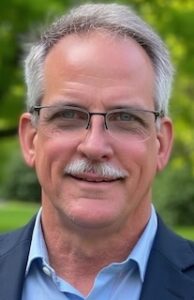
Who is Doug Gray, PhD, PCC?

Doug Gray, PhD PCC, is an expert Family Wealth Advisor, leadership consultant, champion for Next Gen leaders, and teacher. 

Yes, this headshot was AI-generated because his family said he needed to show his grey hair…


Consulting Experience


I help business leaders accelerate their succession planning and legacy goals, with less conflict or confusion. We are all concerned about our wealth. We are all in transition. We all struggle with decision making. We all seek advice. I focus on the “People Side” of family wealth because my clients deserve both the art of expertise and the science of data. I typically collaborate with multidisciplinary teams of advisors who add financial, legal, and insurance expertise. Recently, we have developed an AI-assisted performance feedback communication coaching solution at JITCoach.com that enables leaders to practice communication skills and reduce conflict or anxiety. What about you and your loved ones? What do you need next? We know that leaders need to practice leadership, just as physicians practice medicine and attorneys practice law. Leaders need artful consulting. So, where do you start? We have a track record of 100% client satisfaction and guaranteed results since 1997 with thousands of clients in multiple business sectors (e.g., manufacturing, finance, retail, technology, pharmaceuticals, healthcare, insurance, investments). Many are family-owned business leaders, owners and managers. We provide expertise to business leaders during their transitions. Specifically, we assess individual and team strengths and gaps and recommend behaviors that enable leaders to avoid pain, and to flourish. Why? My parents and family have been critical to all of my success, and to my nuclear family, and families are the lifeblood of positive social change. In every corner of the world. And in every business sector. My recent leadership consulting work has led to: 1) the 360-assessment consulting process described at AssessNextGen.com, 2) the customized content and digital solutions described at Family-Wealth-Network.com, 3) my recent books “Legacy Locked” (2025) and “The Success Playbook for Next Gen Family Business Leaders” (2024), and 4) a hybrid coaching solution at JITCoach.com that uses both customized AI and expert performance coaches to help leaders develop essential communication skills. I would love the opportunity to learn more about you, your family, your business, your vision, and your challenges. Please schedule a mutually convenient time using this link: https://calendly.com/doug-gray/intro-call Here’s to you “At Your Best,” Doug Gray
 
Top skills
360 Assessments • Strategic Consulting • Conflict Managment • Family wealth • Leadership Development


A representative list of leadership coaching engagements include:

  • CFO and 20 leaders in finance and accounting, Fortune 500 energy construction company, who needed to embrace a redesign without losing productivity
  • team of EVPs tasked with redesigning the IT needs of their F100 healthcare company
  • MD struggling with burnout who needed confidential consulting (e.g. anonymity from his employer and insurer)
  • CEO in a technology company recently promoted to replace the founder
  • President and 18 members of executive leadership team, Fortune 500 energy construction company, who needed to demonstrate alignment within 6 months
  • SVP and site managers at a nuclear power construction site who needed to increase alignment with business partners and avoid negative media
  • SVP in functional but de-centralized group who needed to assimilate 20 leaders, using action learning methodology in direct meetings, coaching, and SharePoint to drive accountability
  • Small business owner of a franchise who needed to fire an employee after 11 years of good service
  • SVP, global bank, who needed to reorganize a division
  • VP, global bank, seeking career opportunities
  • newly hired VP who needed to develop radical transformation of a functional group that required external coaching and team building leadership training using a customized app
  • Newly promoted director who lacked interpersonal skills to manage 33 people
  • Founder of an IT company who was not able to develop new business

Business/Organizational Leadership Experience

Doug has been a successful business owner since 1997; he knows the challenges and “what works.”  He co-developed the Leadership Development Institute at the University of Maryland, College Park and taught there for 7 years, and he is a former adjunct faculty member at several colleges including NC State University.  He directed a non-profit agency in Washington, D.C. for 9 years and grew it 900% while managing 120 people.  As a former world-class athlete, Doug knows that the rigor of change requires regular support from experienced consultants, plus a dash of humor.


Education and Training

Doug’s graduate research at Dartmouth College included development of an assessment to determine risk tolerance and risk aversion.  That theme of mitigating risk in business and leadership has prevailed in his continued learning from clients and colleagues in the safety, consulting, executive assessment, and leadership development industries.  He is certified in the Hogan suite, DISC, Positive Psychology, several 360’s, several EI assessments, and 5 coaching certification programs.  Since 2000, Doug has been a Professional Certified Coach (PCC) with the International Coaching Federation.  

A perpetual learner, in his 50’s he earned a PhD in Organizational Leadership from the Chicago School of Professional Psychology.  His research interests include the effect of positive psychology on business leaders, managers, and executive coaches.  His dissertation title is “Positive Psychology Coaching Protocols: Creating Competitive Advantage for Leader Development (2018).


Publications and Appearances

Doug loves to share his expertise as a speaker, facilitator and a writer.  As a keynote speaker, he has addressed annual meetings, executive retreats, and nonprofit leaders.  As a facilitator, he has partnered with clients to design experientially memorable leadership training solutions that range from boot camps to strategic off-sites to contests using customized mobile apps.  As an author, he has frequently been published in journals ranging from Family Firm Institutes’ Practitioner, Family Business.org, to the American Society of Safety Engineer’s Professional Safety to Financial Advisor to dozens of webinars and hundreds of guest blogs.  There are 200+ videos of his content on YouTube at https://www.youtube.com/@NextGenerationLeaders 

He is a published author of articles on leadership development, AI, family business leadership, succession planning, physician burnout, healthcare, analytics, safety and productivity.  Doug has published multiple books:  

Legacy Locked (2025).  See www.Legacy-Locked.com 

The Success Playbook for Next Gen Family Business Leaders (2024)

Objectives and Key Results (OKR) Leadership; How to Apply Silicon Valley’s Secret Sauce to your Career, Team or Organization (2019). See www.OKRLeadership.com

Passionate Action; 5 Steps to Creating Extraordinary Success in Life and Work (2007)

Adventure Coaching; A Guidebook for Action-Based Success in Life and Work (2006)

Most can be purchased  here.


Consulting Value Proposition

“Developing smarter leaders.  Faster.”

Doug will not waste any of your time or resources.  He expects you to achieve great results.  And he always guarantees exceptional value.

Call him now at 704.995.6647  or contact us here or at https://calendly.com/doug-gray/intro-call

For biographies on other Action Learning Associates, Inc leadership consultants and executive coaches, contact us here or review the list of our partners here.  We also provide scaled solutions for any-sized organization, anywhere in the world.

Vote for success secrets here…

Imagine a mega-lottery where they winner gains a lifetime of wealth…

All you have to do is rank the following in the correct order.

Question:  what are the most important secrets to success in life and work?

____  talent    ____ luck   ____ambition

Yes, there is a correct answer.

Yes, I know the answer.

DO YOU?  

Call me at 704.895.6479 or comment below…

Why Coaching can never be a commodity

I just got off a peer coaching call with a man I have never met.

Yet for 3 years we have held each other accountable to our dreams, goals, and visions.  He is my peer coach.

We agreed that coaching can never be a commodity because:

1.  Coaching is an interactive process.  We exchange all that is human.  We interrupt.  We rant.  We share evidence-based wisdom.  We guarantee results.

2.  Commodities have no emotions.  And people do.  You can buy consultative video coaching snippets.  You can buy self coaching units.  And you can buy junk food.  Those commodities are worthless.

One goal of coaching is to enable people to garner their emotional strength into constructive action.

We KNOW that emotions drive thoughts.  And thoughts drive actions.  We even know what portions of the brain, and what neuro-chemical triggers are involved.  So why would anyone even consider that coaching can be a commodity?

I am not threatened by the commoditization of coaching services.

However, I am disappointed by the distrust and fear that some people have that prevents them from asking for help.

Give me a call.  Let’s talk about what you are feeling and thinking and doing.

blog from Seth Godin on Unemployment, Entrepreneurship, and the future of business

My brother sent me this blog article today, from Seth Godin, best-selling author and marketing guru… it provoked me.  What do you think?

Toward zero unemployment

A dozen generations ago, there was no unemployment, largely because there were no real jobs to speak of. Before the industrial revolution, the thought that you’d leave your home and go to an office or a factory was, of course, bizarre.

What happens now that the industrial age is ending? As the final days of the industrial age roll around, we are seeing the core assets of the economy replaced by something new. Actually, it’s something old, something handmade, but this time, on a huge scale.

The industrial age was about scarcity. Everything that built our culture, improved our productivity, and defined our lives involved the chasing of scarce items.

On the other hand, the connection economy, our economy, the economy of the foreseeable future, embraces abundance. No, we don’t have an endless supply of the resources we used to trade and covet. No, we certainly don’t have a surplus of time, either. But we do have an abundance of choice, an abundance of connection, and an abundance of access to knowledge.

We know more people, have access to more resources, and can leverage our skills more quickly and at a higher level than ever before.

This abundance leads to two races. The race to the bottom is the Internet-fueled challenge to lower prices, find cheaper labor, and deliver more for less.

The other race is the race to the top: the opportunity to be the one they can’t live without, to be the linchpin we would miss if he didn’t show up. The race to the top focuses on delivering more for more. It embraces the weird passions of those with the resources to make choices, and it rewards originality, remarkability, and art.

The connection economy continues to gain traction because connections scale, information begets more information, and influence accrues to those who create this abundance. As connections scale, these connections paradoxically make it easier for others to connect as well, because anyone with talent or passion can leverage the networks created by connection to increase her impact. The connection economy doesn’t create jobs where we get picked and then get paid; the connection economy builds opportunities for us to connect, and then demands that we pick ourselves.

Just as the phone network becomes more valuable when more phones are connected (scarcity is the enemy of value in a network), the connection economy becomes more valuable as we scale it.

Friends bring us more friends. A reputation brings us a chance to build a better reputation. Access to information encourages us to seek ever more information. The connections in our life multiply and increase in value. Our stuff, on the other hand,  becomes less valuable over time.

… [this riff is inspired by my new book…]

Successful organizations have realized that they are no longer in the business of coining slogans, running catchy ads, and optimizing their supply chains to cut costs.

And freelancers and soloists have discovered that doing a good job for a fair price is no longer sufficient to guarantee success. Good work is easier to find than ever before.

What matters now:

  • Trust
  • Permission
  • Remarkability
  • Leadership
  • Stories that spread
  • Humanity: connection, compassion, and humility

All six of these are the result of successful work by humans who refuse to follow industrial-age  rules. These assets aren’t generated by external strategies and MBAs and positioning memos. These are the results of internal struggle, of brave decisions without a map and the willingness to allow others to live with dignity.

They are about standing out, not fitting in, about inventing, not duplicating.

TRUST AND PERMISSION: In a marketplace that’s open to just about anyone, the only people we hear are the people we choose to hear. Media is cheap, sure, but attention is filtered, and it’s virtually impossible to be heard unless the consumer gives us the ability to be heard. The more valuable someone’s attention is, the harder it is to earn.

And who gets heard?

Why would someone listen to the prankster or the shyster or the huckster? No, we choose to listen to those we trust. We do business with and donate to those who have earned our attention. We seek out people who tell us stories that resonate, we listen to those stories, and we engage with those people or businesses that delight or reassure or surprise in a positive way.

And all of those behaviors are the acts of people, not machines. We embrace the humanity in those around us, particularly as the rest of the world appears to become less human and more cold. Who will you miss? That is who you are listening to .

REMARKABILITY: The same bias toward humanity and connection exists in the way we choose which ideas we’ll share with our friends and colleagues. No one talks about the boring, the predictable, or the safe. We don’t risk interactions in order to spread the word about something obvious or trite.

The remarkable is almost always new and untested, fresh and risky.

LEADERSHIP: Management is almost diametrically opposed to leadership. Management is about generating yesterday’s results, but a little faster or a little more cheaply. We know how to manage the world—we relentlessly seek to cut costs and to limit variation, while we exalt obedience.

Leadership, though, is a whole other game. Leadership puts the leader on the line. No manual, no rule book, no überleader to point the finger at when things go wrong. If you ask someone for the rule  book on how to lead, you’re secretly wishing to be a manager.

Leaders are vulnerable, not controlling, and they are racing to the top, taking us to a new place, not to the place of cheap, fast, compliant safety.

STORIES THAT SPREAD: The next asset that makes the new economy work is the story that spreads. Before the revolution, in a world of limited choice, shelf space mattered a great deal. You could buy your way onto the store shelf, or you could be the only one on the ballot, or you could use a connection to get your résumé in front of the hiring guy. In a world of abundant choice, though, none of these tactics is effective. The chooser has too many alternatives, there’s too much clutter, and the scarce resources are attention and trust, not shelf space. This situation is tough for many, because attention and trust must be earned, not acquired.

More difficult still is the magic of the story that resonates. After trust is earned and your work is seen, only a fraction of it is magical enough to be worth spreading. Again, this magic is the work of the human artist, not the corporate machine. We’re no longer interested in average stuff for average people.

HUMANITY: We don’t worship industrial the way we used to. We seek out human originality and caring instead. When price and availability are no longer sufficient advantages (because everything is available and the price is no longer news), then what we are drawn to is the vulnerability and transparency that bring us together, that turn the “other” into one of us.

For a long time to come the masses will still clamor for cheap and obvious and reliable. But the people you seek to lead, the people who are helping to define the next thing and the interesting frontier, these people want your humanity, not your discounts.

All of these assets, rolled into one, provide the foundation for the change maker of the future. And that individual (or the team that person leads) has no choice but to build these assets with novelty, with a fresh approach to an old problem, with a human touch that is worth talking about.

I can’t wait until we return to zero percent unemployment, to a time when people with something to contribute (everyone)  pick themselves instead of waiting for a bureaucrat’s permission to do important work.

Reason #9. Why I care about safety.

Reason #9.  Rock climbing.

I love to lead climb.

In my 20s I spent several months rock climbing the best cliffs in the United States.  For 3 months I lived in a car with several friends, and we travelled to Boulder, CO and Devils Tower, WY.  We ate granola.  And macaroni and cheese.  While studying guidebooks.  Or talking with lanky climbers from all over the world.

Boulder Canyon and Eldorado Canyons were meccas for serious climbers.  As a lead climber, my partner and I started on the bottom and climbed all day, until we summited on a ledge.  Then we rappelled back down, or hiked down.  Every afternoon the thunderstorms terrified us.  Every climb had terrifying sections.  At Devils Tower we did overhanging aid climbs that required swinging traverses.  Just like James Bond on the Eiger in Switzerland.  We learned to mitigate risks.

When moving on vertical rock, you have 4 potential points of contact.  If two feet and one hand are enough, then you can move the other hand.  Climbers learn to distribute weight evenly.  To select resting places.  To control energy exertion.  To keep your hands below your heart to reduce fatigue.  To ignore fear.

After days or weeks, your hands develop callouses.  After many first ascents, your confidence increases.  So you try something harder.

And then you fall.

My most terrifying fall was about 40′ late one afternoon.  I had felt invincible.  Then the crack thinned out.  I could not find any placement.  My legs shook.  I could not climb back down.  And my last piece of protection (climbing hardware) was about 20′ below me.  Because I had felt so confident… I had climbed higher than I should have.

I recall pausing.  There was a choice.  And I chose to fall.  I still recall that instant, some 30+ years later.

So I tumbled 20′ to the climbing hardware, then another 20′ below that, until my partner saved my life.  We were hundreds of feet above the canyon floor.

That instant of choice reminds me that we can choose to be safe, or not.

Just like adults on a job site.  Or adults sorting through career choices.  Or adults considering a risky move.

What are some reasons why you care about safety?