The rise of artificial intelligence is not on the horizon.
It’s already here. Read Harvard Business Review, Forbes, The Conversation app, or any news post. As Peter H. Diamandis writes in Metatrend #2: AI & Quantum (2024), the question isn’t whether AI will change the world- it’s how quickly, and how well prepared we are to adapt. I’m a fan of his books.
Since 1997, I’ve worked with leaders across several sectors using the Action Learning model– a proven framework that aligns real-world problem-solving with strategic learning. In that time, I’ve watched leaders panic or pivot in the face of digital disruptions. You have seen the panic in 2008. Today is the pivot.
The key difference? Those leaders who thrive don’t wait for government programs or corporate re-skilling. They invest in mastering three core skills that shape their adaptability, agency, and long-term success. That’s why I earned my PhD in business psychology in my 50s… Here are some highlights. You can master these skills.
The Three Essential Skills in an AI World
In a recent Moonshots podcast conversation between Peter Diamandis and Tony Robbins, they outlined three core competencies to help leaders remain relevant:
Pattern Recognition, Pattern Utilization, and Pattern Creation.
These three skills are not new to those of us who practice Action Learning. In fact, they are embedded into the very DNA of our model.
Let’s break them down and show how they’re alive in the executive leaders I’ve coached for three decades. YOU can apply these three skills immediately.
1. Pattern Recognition: Learning from Data
Tony Robbins describes Pattern Recognition as the ability to look at history, human behavior, and technology trends and say, “I’ve seen this before.” The result is less fear.
In Action Learning, we often begin with what Revans called “programmed knowledge” and “questioning insight…” the act of recognizing patterns in current systems, processes, and outcomes. I teach leaders to ask questions like:
“Where else have you seen this behavior?”
“What patterns are repeating here?”
“What’s being ignored?”
“What numbers and words can we us to describe this behavior?”
For example: In a healthcare company facing massive turnover, our Action Learning team mapped resignation data and recognized patterns of burnout following project cycles. By naming the pattern, the client was no longer surprised by attrition. They recognized seasonality and then began to prevent it.
2. Pattern Utilization: Acting on What You See
Recognition is only useful if it leads to effective action. As Tony Robbins notes, civilization began when we learned to use the pattern of seasons—planting in spring, harvesting in fall. The leap from fear to control came through utilization. Today is the season of springtime.
In Action Learning, we emphasize “taking action and reflecting on the results.” A team that sees a pattern of client dissatisfaction, for example, must test new workflows, measure response times, before they can adapt. Tools like surveys, interviews, observations, 360 assessments are helpful.
For example: One healthcare client noticed repeated delays in patient discharges every Friday. Instead of managing around the bottleneck, they used Action Learning to test discharge protocol changes. They used cross functional teams, called Action Learning Sets, to explore solutions. They saw a 17% improvement in weekend flow within 60 days. And yes, automation helped immensely.
3. Pattern Creation: Designing What Comes Next
This is where great leaders shine. This is where YOU can shine.
Diamandis calls it the highest skill: creating new patterns. Not just responding to the world but reshaping it. He founded Singularity University, the XPrize’s, and the Open EXO community to embrace converging technologies. In Action Learning, we guide teams to generate new frameworks, policies, and cultural norms based on data and learning.
This level is visionary. It’s where leaders become creators. Practical creators of one solution after another.
For example:In a regional asphalt company, an Action Learning team created a new RACI-based scheduling protocol that reduced field crew conflicts by 42%. That new pattern, tested and refined by a newly promoted operations manager, became company policy within one quarter.
The BIG Identity Shift: From Manager to Creator
This AI revolution is not just about skills. It’s about identity.
The Action Learning model pushes leaders to shift from “problem manager” to “solution creator.” That’s the identity shift Robbins, Diamandis, Revans and I are describing. We say, “Stop managing problems. Start creating solutions.”
FACT 1: You won’t be replaced by AI. FACT 2: You’ll be replaced by someone who uses AI more creatively than you do… unless you become that person first.
If you’re interested in diving deeper into the frameworks behind this post:
Diamandis, Peter H. (2024). Metatrend #2: AI & Quantum.
Lately I’ve been studying the design of psychological thrillers to determine what I like and don’t like. And what I might adopt or discard in my writing.
After identifying best sellers with over 5 million copies sold, from contemporary male authors, I settled on Alex Michaelides, who recently rocked the literary world with The Silent Patient and The Maidens.
Sadly, those titles were not in the local library, so I settled for The Fury. I’ve bought several other titles since reading this book.
If a thriller is designed to seduce us with suspense, misdirection, and character depth, then The Fury offers two out of three. Character depth is missing.
This isn’t a summertime beach read. It’s a constructed play. A stage set. And in many ways, I think that’s his point.
Narrative Design: When the Story Knows It’s a Story and thinks It’s Really Clever.
We’re introduced to an unreliable narrator who doesn’t just bend the truth, he crafts a performance. Like a playwright. Michaelides leans into the “meta” style: breaking the fourth wall, teasing what he’ll reveal later, and toying with our trust like an illusionist. It’s part Alfred Hitchcock, part Greek tragedy, part Netflix writer’s room. Totally unfamiliar to me… which made me feel ignorant at times.
For readers who enjoy that layered, self-referential tone, it may be a thrilling design. For those who want to read a clean narration, you may feel disappointed.
I suppose that all art deserves meta-new-radical styes… To test the norms. Call me ignorant.
Characters: Lots of Surface, Not Much Substance
Michaelides writes about beautiful, broken people in exotic places. The celebrity actress. Beloved by all. Then murdered. And this locked room setting- a private Greek island- creates an intense cinematic atmosphere. Surrounded by the endless winds, like the ancient Greek Furies, who reflect their fears and tensions. The characters? They’re glamorous, enigmatic, and often underwritten. Archetypes more than complex characters with emotional depth. As if they are wearing those large masks from Greek tragedies.
The central narrator offers clever insights, but rarely emotional vulnerability. And that’s the gap. We’re watching from the VIP balcony in the Greek theater. Outdoors. But never allowed backstage or inside their hearts.
Style: Controlled, like a noisy wind whipping around an ancient Greek column.
The Fury moves slowly, like a carefully blocked play. That pacing is deliberate. The reveals are timed. Slowly. The tension is intellectual more than visceral. Some of the twists work, others feel dropped in as if from a screenwriting workshop. Maybe that’s part of the meta-design.
It’s an emotionally distant style. Perhaps reflecting the celebrity movie star who is admired more than deeply loved.
What Works for me:
Narrative voice that dares me/ you to keep up with clever reversals
Elegant structure with Acts that create a theatrical sensibility
Strong control over tone and pacing and setting
Evokes the classic designs from Agatha Christie or Alfred Hitchcock
What Doesn’t work for me:
Emotional detachment from the central players
Plot twists that feel too engineered, or too late (Maybe I’m getting too critical in my old age)
Meta narration design led to frustrations and made me set the book aside (Probably because I don’t understand the fourth wall direct appeals to readers.)
Character development that rarely gets beneath the masks worn on the island
Some Final Thoughts
I closed The Fury feeling impressed but not moved. I wanted to be greatly moved. Perhaps I should have read his other titles first…
The Fury is a clever novel about storytelling. But that cleverness left me wanting.
Read it if you want a stylish mental puzzle.
Have you read it? Did the narrator charm you or push you away?
Drop a comment- I’d love to know what you think of thrillers that know they’re thrillers.
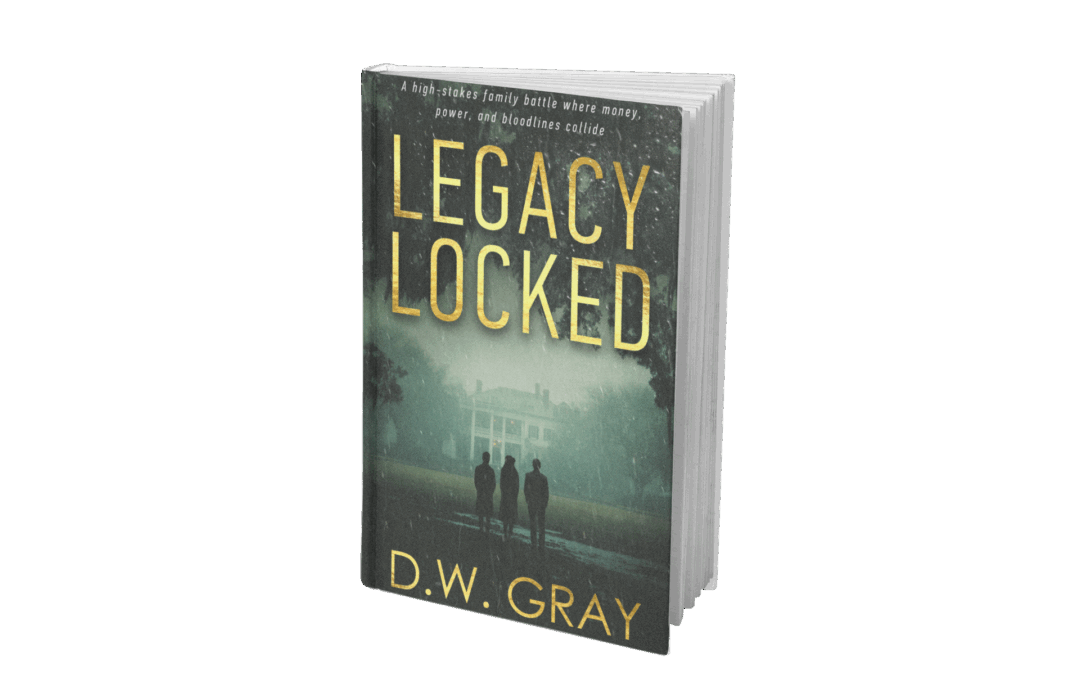
Will, Harper, and Nora Lee Dawson are heirs to a vast Southern empire. But when their father dies without a will and their calculating mother disappears, the family’s motto becomes a curse. Do they “Protect our assets? Trust nobody?”
Threats include legal ambiguity, AI manipulation, cyber predators, bizarre beneficiaries, and new advisors with contradictory expertise. To unlock – and protect- their family legacy, the siblings must develop new powers that their parents never taught them: Hope. Agency. Resilience. Optimism.
They have to do what they’ve never done before— trust each other.
FREE access is at https://action-learning.com/product/legacy-locked-book/. Use the coupon code crubne3q
Legacy Locked is more than a novel.
It’s a journey into the forces that shape what we inherit… and what we hide.
Gift #2: Download Legacy Locked book now. While it’s still free. FREE access is at https://action-learning.com/product/legacy-locked-book/. Use the coupon code crubne3q
Because the only thing scarier than a locked legacy… is never knowing what was inside.
Family Capital is defined as durable family harmony and governance.
Financial Capital is any investable asset – time, treasure, tithe or truths.
I’m not sure which form of capital goes first.
But I am sure that values drive behaviors. We love our children, and we would take a leave from work to care for our children. Right?
Recently one of my clients shared a story of a family that did just that. They rallied around a 2-year old fighting cancer. They re-designed work loads and scheduled care givers. They pooled money to support the healthcare costs. And last week they rang the bell- to celebrate! The nurses lined the hallway. The neighbors lined the street. The grandparents drove the car. The parents waved to neighbors and protected their immune-compromised child from any risks. Values drive our behaviors.
I am also sure that most families share the same values: integrity, asset preservation, legacy stewardship, philanthropy, responsible service to others.
When I directed a non-profit summer camp program at a Quaker School near Washington, DC, I saw those values every day. Parents invested as much as possible to provide more opportunities for their children. That program grew over 800% because of their shared values.
Many of those parents struggled to support their children. They wanted to support their family capital. And they had limited financial capital. Just like you and I.
My experience is that most families struggle with financial literacy because they don’t discuss financial capital enough. There is an endless need for family meetings to discuss cash flow and investing.
When our children were in Middle School and High School we had Sunday evening meetings after dinner to discuss the week, and financial matters. They were short meetings. The children led parts of them. They learned to live below their means. They learned that what their friends posted on social media was not always true. They learned to invest in compounding assets.
Now I facilitate family meetings for clients. On Tuesday night I facilitated another virtual 90-minute family meeting. The patriarch, matriarch and a sister represented the Elders. The Next Gens included 3 children aged 28-40 and one spouse. Three wealth advisors provided content on retirement and investing options. My role was to encourage the Next Gens to ask questions about Roths, IRAs, compounding, employee matching… everything needed for them to make more informed decisions.
That was their second educational session and we will have at least two more in the next 4 months. One breakthrough was when the daughter, newly divorced and single, realized more options from her employee match. Another breakthrough was when one of the sons realized that as an independent contractor doing work for the family business, he needed to contribute more to his pretax options.
As the children shared their takeaways the father was glowing with delight.
Every Elder wants their children to make smarter financial decisions.
Maybe Family Capital and Financial Capital go hand in hand.
A grey-haired patriarch recently told me, “I love my kids and grandkids. But I don’t trust their ability to manage my money when I’m gone. My lawyer tells me that I need to restrict their access. What do you recommend?”
This Family Business Chaos myth assumes:
That fears motivate most human behaviors
That Elders need to restrict access to financial assets
That the Next Gen family members are unable to manage money
That advisors can recommend effective solutions
How silly.
Tragically, I’ve met “Family Business Consultants” who boast about $100,000 annual retainers to “manage the process.” They presume that family business leaders are inherently unstable, dysfunctional, heading toward chaos. With a wink they say, “And who knows when you will need me?”
How tragic and silly.
I call it the Family Business Chaos myth. In future posts I’ll share some more related myths. In this post, let’s look at each of these 4 statements in turn.
Fears do motivate most human behaviors. When we are hungry we eat. When we are threatened we fight. When we are confused or uninformed we create stories to “fill in the silence.” I recently heard about two Elders who anticipated a visit from their niece, whom they had not seen in 15 years. They created stories to explain the visit, from “she must have cancer” to “her husband may have abused her.”
In the same way, Elders often create stories to explain their kids and grandkids. It’s a delightful, ancient past time! When I visit Elders they may entertain me with stories, just as we drink lemonade on the porch. They often voice fears such as “she will never find a man who appreciates her” or “he couldn’t make money if we served it on a golden platter.” Those stories are entertaining. But they may be downright silly.
That idea that Elders need to restrict access to financial assets is ancient, and often based on some local precedent. We all repeat stories that reinforce our biased beliefs. Have you heard about our neighbor named Bubba who received a trust fund when he turned 21, then became an opioid addict? Confirmation bias occurs when we repeat desired beliefs. The fact is that most people with access to money learn to live below their means. They practice financial literacy.
Restricted access to wealth, or any resource, does not accelerate social change. In fact, restricted access can imprison people. Look at global slavery, work conditions, oppression of women or poverty. Restricted access may cause violence. Look at global divorce, broken families, suicides, loneliness, drug abuse. Instead, what if wealth advisors actually shared their knowledge in a series of educational sessions? What if digital courses encouraged Next Gen leaders to ask questions about index funds, incentive trusts, donor assisted funds, IRAs, retirement, employee matches?
The #1 web browser is Google because people search for information. The #2 web browser is YouTube, because people search for answers. And they are both owned by Alphabet. The fact is that Next Gens are digitally trusting, better educated than many Elders, and often want to develop more financial literacy. Just ask them!
The notion that Next Gen family members are unable to manage money is based on ignorance. Throughout recorded history, in every corner of the world, most assets are quietly transferred to the Next Generation. (Also called the Rising Generation, like a Rising Tide or a tsunami). If Elders are not able to teach responsible wealth management, then other advisors can do so. One positive outcome from the Certified Financial Professional (CFP) designation is that wealth advisors are better self-managed to actually serve their client interests. For many decades “financial managers” were incentivized by higher commission fees or transactional incentives from their product managers.
Throughout my career I’ve taught people how to manage their precious time, money, treasures and talents. Nothing is more important. Perhaps anyone reading or sharing this article shares that same commitment.
Teaching financial literacy assumes that Elders and Next Gens are willing to learn. When I facilitate family meetings, I encourage the Next Gens to ask questions, because curiosity is the currency of learning. When they ask questions, the wealth advisors can share resources. I also encourage the Elders to bite their tongues- which is difficult. They often want to share their values and knowledge. But our kids learn to swim from other adults, not from their parents. Our kids learn to golf from professionals, not from their parents. In the same way, when Next Gen leaders ask questions and learn, the Elders smile with delight. They are practicing financial literacy and seeing that “light in their eyes” when their children and grandchildren actually learn.
We want to believe that advisors can recommend effective solutions because we want to trust “experts.” We go to physicians when we require healthcare, and they diagnose and treat us. We go to lawyers when we require asset transaction or protection. For many years, when I asked Google “Can you provide some business consulting?” it replied “Not at this time.” Now over 40% of my clients use ChatGBT for business consulting. Immediately. I have copied responses from one platform, like Claude, to ask other platforms, like Inflection, to provide more details. And recent studies confirm that some AI platforms demonstrate more empathy than “professionals.”
Let’s assume that advisors using AI will be more effective than those not using AI. And they will become even more effective next month. And every month thereafter. The best advisors are already using AI to provide more recommendations than ever for their clients. In seconds. Converging technologies, such as healthcare and AI consulting, will increase in power and provide even more value. Accurately. Imagine an empathic robot that suggests how Elders can bite their tongues. Imagine a hologram of the founders that can explain the values and challenges faced 50 years ago. Imagine a family meeting with 5 generations of healthy, opinionated owners instead of 3 generations.
Now imagine that one “family business consultant” can serve your legacy needs. How silly.
The example of the $100,000 annual retainer from that winking “family business consultant” who says, “you never know when you may need me” could be a waste of money.
My experience is that the presumption that family business leaders are inherently unstable, dysfunctional, heading toward chaos is downright silly. It may be lucrative for those using retainers. But it ignores the reality that family business leaders can flourish.
Yes, I’ll address HOW to flourish in a series of future posts. Please share this post with anyone who might appreciate it.
And add your thoughts or comments on this post about the Family Business Chaos myth? This could become a discussion.

Recent Comments